In our latest episode, Claude and I talk about two movies where characters must confront their past; Lone Star (1996) and Mystic River (2003). Here’s what I wrote about each of them when writing on Facebook about my favorite movies released in the U.S. in 1996 and 2003, respectively.

I own a book called Legends, Lies and Cherished Myths of American History, by Richard Shenkman, published over 30 years ago. As the title indicates, it purports to tell the truth behind a lot of what we were taught in history classes growing up (about politicians, family life, famous sayings, and more), What we are taught about our country’s history has become a hot topic again as there is renewed, and welcome, debate about who we choose to honor through a statue (or having a place named after), as well as who we choose to put the spotlight on when it comes to our history, especially if it marginalizes people of color and women. The way we view history also relates to personal history as well a country’s history; one person may only have happy memories of their parents, while that person’s sibling may think otherwise. Personal and political history are the subject of John Sayles’ Lone Star, one of his best movies.
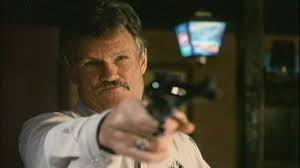
The title of the movie refers to the slogan of Texas, which is where the movie takes place, specifically Frontera, a small border town near Laredo, and near an army base. Cliff (Stephen Mendillo) and Mikey (Stephen J. Lang, not to be confused with the Stephen Lang from Avatar), two sergeants from the base, are out treasure hunting one day in a deserted shooting range when they find an old sheriff’s badge, a Masonic ring, and a human skull (later, they also find a bullet). Sam Deeds (Chris Cooper), the town sheriff, is able to confirm the badge, ring and skull all belonged to Charlie Wade (Kris Kristofferson), the former sheriff of the town 40 years earlier, a corrupt man who had ruled the town with an iron fist, and who had mysteriously disappeared one night, along with $10,000, after a confrontation with Buddy Deeds (Matthew McConaughey), Sam’s father and one of Charlie’s deputies. While the townspeople relish this story, and Buddy (whom they’re dedicating a courthouse to), Sam has always resented his father, ever since he broke up Sam’s teenage romance with Pilar (Elizabeth Pena), now a schoolteacher, single mother, and widow. As Sam begins to investigate the circumstances surrounding Charlie’s death, he believes Buddy was the one who actually killed Charlie, though it may be he just wants that to be true.
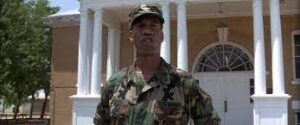
Sayles also sets up a parallel story involving Col. Del Payne (Joe Morton), the new commanding officer of that army base, which is getting shut down in the near future. While stationed at the base, Payne has to handle an incident involving Athens (Chandra Wilson), one of the soldiers on the base, at a nearby bar (two men get into a fight over her). That incident brings Col. Payne back into the orbit of his estranged father Otis (Ron Canada), who owns the bar where it happened (the colonel’s son Chet (Eddie Robinson) was also at the bar that night, though only he and Otis know that) – and who also, as it happens, is connected to Charlie Wade and Buddy Deeds. Payne resents his father for his womanizing and for abandoning his family, only to realize there’s a lot more to his father than he thinks.
Again, history runs throughout the movie. Pilar is a history teacher, and there’s a scene where she and other faculty members get into an argument with school board members about the history textbooks, with whites wanting only their view of history to be taught (a fight that continues to this day). Otis is a history buff, with a room in his bar devoted to pictures and books about his African-American and Native-American ancestry, which he shows Chet. Then there’s Buddy’s history, with Hollis (Clifton James), once a deputy under Charlie, now the town mayor, being the keeper of Buddy’s legacy and the teller of his stories. Hollis and Mercedes Cruz (Miriam Colon), Pilar’s mother, who owns a Mexican restaurant, are the ones behind the push to name the courthouse after Buddy, even though Danny (Jesse Borrego), a local reporter, has a story Buddy evicted Mexican residents of a local community in order to create lakefront property for a tourist attraction that Buddy and Hollis profited from. However, most people Sam talks to about Buddy, including Otis and Minnie Bledsoe (Beatrice Winde), whose husband owned that bar before Otis did, maintain Buddy always dealt with people fairly (as Otis says, “I don’t recall a man in this county – black, white, or Mexican – who’d hesitate for a minute to call on Buddy Deeds to solve a problem”).
Sayles, who as usual, edited the movie as well as writing and directing, and cinematographer Stuart Dryburgh don’t do much to differentiate between a scene taking place in the present and one that takes place in the past; no sepia tones, no dissolves, just panning the camera over to signify a transition from past to present and back again. However, in the context of this movie, it works because it helps illustrate how the past is still alive for many of the main characters, and how they like, or need, to hold on to it. Whether it’s Otis telling the story of what really happened to Charlie Wade the night he disappeared, and Dryburgh pans over from the bar in the 90’s to the bar in the 50’s (Gabriel Casseus plays the younger Otis), or, in a poignant moment, when Sam and Pilar talk by a stream, and after she leaves, the camera pans over to a young Sam (Tay Strathairn, son of Sayles regular David Strathairn) and Pilar (Vanessa Martinez, who went on to appear in two more Sayles movies) talking, and then the camera comes back to Sam.*
Along with the history, Sayles throws in the tropes of the mystery film – did Buddy actually kill Wade and take the money? – and the western, with the lone sheriff ruling over the town (Charlie Wade), as well as the lone sheriff trying to investigate what he thinks is the dark secret of the town despite opposition (Sam). The mystery is pretty straightforward, with Sayles playing fair throughout, though it does mean it’s easy to figure out who really killed Charlie Wade (there’s another secret that gets revealed by the end of the movie, and while Sayles plays equally fair with that one, the revelation of that secret is a total surprise; when I saw the movie in the theater when it came out, the audience I was with gasped at the reveal). At the same time, Sayles pays attention to the other stories equally well. He even gets some humor into the movie. Cliff is dating Priscilla (LaTanya Richardson), another sergeant on the base, and when Mikey wonders if her family will accept the fact he’s white, Cliff responds they’re just happy it proves she’s not a lesbian, to which Mikey responds, “It’s always heartwarming to see a prejudice defeated by a deeper prejudice.” When Sam says he’s going to “go over to the other side”, Ray (Tony Plana), his deputy, wonders, “Republicans?” Of course, mostly, it’s played for drama; when Athens fails a drug test, and Col. Payne wonders why she’s in the army in the first place, she responds, “They pay us, sir” (as Sayles points out in the book-length interview book he did with Gavin Smith, many people of color join the military precisely because it gives them a job and more opportunity for advancement than in the private sector), and Sayles also gets into the issue of Mexicans coming across the border, as Mercedes reluctantly helping her busboy’s wife come across, and she remembers how she came across the same way. The score by Mason Daring, Sayles’ frequent composer, also brings together the mélange of musical styles down in Texas, although the best musical moment comes from a prerecorded song; when Sam and Pilar dance to Ivory Joe Hunter’s “Since I Met You Baby” at Miriam’s restaurant.
Cooper, who had previously worked with Sayles on Matewan (as well as in a small role in City of Hope), is playing to the type of another famous actor with the last name of Cooper who was associated with westerns, but he plays it well, and shows what a good listener he is (his role is mostly reactive). Pena, who had appeared in Shannon’s Deal, the show Sayles created, gives a forceful performance as Pilar, and she and Cooper have very good chemistry. Kristofferson is cagey and menacing as Charlie Wade. Morton, as with his character in City of Hope, is playing someone caught between two worlds, and handles it well again. And the rest of the cast, including Frances McDormand as Sam’s ex-wife, is very good in their roles. Though Sayles has continued to make good, or at least interesting, movies, Lone Star remains the last time he hit the peak of his talent as a filmmaker, as well as a sobering reminder about the way history informs everything we do.
*-In another scene with the younger Pilar and Sam, Sayles also throws in an homage to his B-movie roots; the movie the two watch at a drive-in before Buddy catches them is Black Mama, White Mama, a prison exploitation version of The Defiant Ones starring Pam Grier and co-written by Jonathan Demme.
(Note: this review of Mystic River was originally written for the fanzine CAPRA in 2003, and is followed by corrections and additional thoughts)
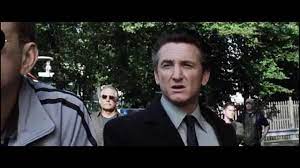
Clint Eastwood’s latest movie – after the entertaining but somewhat routine Space Cowboys and Blood Work – Mystic River, adapted by Brian Helgeland from the novel by Dennis Lehane, starts out with three boys who are friends, Jimmy Markum, Dave Boyle, and Sean Devine. One day, when the boys decide to carve their names on the sidewalk, two men who present themselves as cops come up, chew the boys out, and tell them to get in their car. Dave gets in the car, but something tells Jimmy and Sean to stay away. So Dave, of course, is kidnapped and molested, until he finally escapes and comes home. But even though he’s given a hero’s welcome, he, along with Jimmy and Sean, know that glory will be short-lived. 25 years later, Jimmy (Sean Penn) is an ex-con who runs a convenience store, is married to Annabeth (Laura Linney), whom he married after his first wife died, and has three daughters. Dave (Tim Robbins) is a handyman who is married to Celeste (Marcia Gay Harden), and has a son. Sean (Kevin Bacon) is a homicide detective who is separated from his wife. All of them, in other words, are living on a fragile edge. The three come back together when Jimmy’s oldest daughter, Katie (Emmy Rossum), is murdered. Sean is the detective assigned to the case, along with his partner Whitey Powers (Laurence Fishburne). And Dave came home the night of the murder with blood on his clothes, and while he told a story of facing down a mugger, Celeste doesn’t believe him, and she, along with Whitey, and even Sean and Jimmy, begins to suspect him, especially when he reveals he saw Katie before he died.
Back in 1992, when Eastwood made Unforgiven, a lot of critics saw this as his repudiation of The Man With No Name character he played in the spaghetti westerns he did with Sergio Leone. Similarly, some have seen this film as turning his back on his Dirty Harry character and the idea of vigilante justice. There are only three acts of violence shown in the entire film – and interestingly enough, none of them are Katie’s murder – and none of them are cathartic. Not only that, but one of them ends up against someone who’s innocent, and the person who commits this act gets off scot-free. This is miles away from the charge we get from revenge killings in other movies, and it’s certainly to Lehane, Helgeland, and Eastwood’s credit that they go for this more complex view of justices. The closest Eastwood ever came to this before was in his film Tightrope, where his detective character shared some of the same proclivities as the serial killer he was after, but it’s not as deeply explored as it is here.
Still, while all of that is admirable, it’s the sense of personal history that makes this resonate. All of these characters, perhaps wounded by their own history, are reluctant to open up until Katie’s death (except, of course, for Whitey, the only one not from the neighborhood). And once that happens, you sense how the incident from the car still haunts them. Katie had been planning to run away with Brendan Harris (Tom Guiry), the one boy Jimmy absolutely forbade her to see, and we soon find out that’s more than just Jimmy being a naturally protective father. Later, after Katie is dead, Jimmy confesses aloud, “I know in my soul I contributed to your death; I just don’t know how”. As for Dave, he refuses to talk about his past to Celeste, and refuses to think about it, except in his nightmares. When he does finally talk about it, he can only talk about it in the third person, calling himself The Boy Who Escaped From Wolves (literally here; in the flashbacks, when he’s escaping, we hear wolves howling), which scares Celeste even more. The only person trying to escape the weight of the past is Sean. His ex-wife calls him on his cell phone, and while she never says anything, he attempts to try and make sense of where they went wrong, and how it can be fixed.
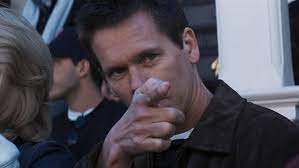
One charge that’s stuck with Eastwood his entire career is how inexpressive he is, and how inexpressive the actors who’ve worked under him are (partly this is blamed on his penchant for few takes; what he sees as spontaneous, others see being afraid to dig deep). He’s managed to become more than just a clenched-teeth actor in the last decade, however, and that’s certainly not a charge you can lay at this movie. Penn throws himself into his role with characteristic resolve and honesty, especially in the scene where he cries, without even knowing it, for Katie. Robbins uses his height to his advantage here, playing Dave as a wounded giant who seems weighed down by his past. Bacon is the surprise here, relying on none of his mannerisms, and being convincing as the cop. Fishburne is appropriately flip and smart as Whitey. Some have criticized Linney’s performance, especially for a Lady Macbeth type moment near the end of the movie. Granted, her character is better developed in the novel but I think Linney brings her usual toughness to the role, so that final speech didn’t seem out of place. And it’s almost unbearable to watch Harden here. If Annabeth is like a proud, stern eagle, Celeste is the frightened, fragile dove, and Harden nails that aspect. Much has been made of the last scene, a parade, where Sean gives Jimmy a chillingly ambiguous look, and while that’s a powerful moment, I think the look exchanged between Annabeth and Celeste right before is even more powerful.

Eastwood also wrote the music, and my one complaint with the movie is his excluding Rickie Lee Jones’ “Pirates (So Long Lonely Avenue)” from the soundtrack (in the novel, it’s the song Jimmy and Annabeth first danced to, and if there’s anybody who fits Jones’ idea of “sad-eyed Sinatras”, it’s Jimmy). But for the most part, we get the richness of Lehane’s novel, not just in the characters, but the sense of the neighborhood and its history. All of that comes together in the crowning achievement of Eastwood’s career.
–
So, a big error right off the bat; Dave gets into the car at the beginning instead of Jimmy and Sean because the fake cops (one of them played by John Doman, best known to me as Rawls on The Wire) say they’re taking him home to his mother, whereas Jimmy and Sean’s parents live right on that street. Also, I should have mentioned the changes from the novel, other than that Rickie Lee Jones song being cut out, and the parts of Annabeth and Celeste being cut down (though Eastwood reportedly told Helgeland, to beef them back up somewhat); Jimmy’s last name is changed from Marcus (in the novel) to Markum, he, Dave and Sean are trying to pull a hockey puck from the sewer when the fake cop comes by, not writing their names in the cement, and there are scenes establishing the three main characters as adults that aren’t in the novel (Jimmy at the store with Katie, Dave walking the streets of his old neighborhood with his son, Sean and Whitey at a different crime scene on a bridge). I also should have mentioned how Eastwood insisting on shooting in Boston lends authenticity to the movie, as well as cinematographer Tom Stern’s fine work in capturing the locations (Stern has shot most of Eastwood’s films since Blood Work). Also, one nice bit of trivia; Kevin Chapman, who plays one of the Savage brothers (the crooks who work with Jimmy), and who went on to appear in Brotherhood, the Showtime series that was one of the best shows of the 2000’s, also appeared in a small role in 21 Grams.
A couple of other things to mention. First of all, of course, there’s been quite a pushback against Penn’s performance, saying it’s overacting to the nth degree, and quite bad (I won’t dignify the other term it’s been characterized as by using it, as I’m sick to death of that term, as I’ve mentioned before). Good overacting and bad overacting, to me, is in the eye of the beholder; I’m the one who thinks Anthony Hopkins does awful overacting in Bram Stoker’s Dracula, while a lot of people I know really like him in that, so I can only say I disagree about Penn here. Secondly, Eastwood’s career went down some interesting paths for the rest of the decade, but in this past decade, he seems to have taken a turn towards simplistic readings of the material he chooses. Still, I do think Mystic River still holds up.