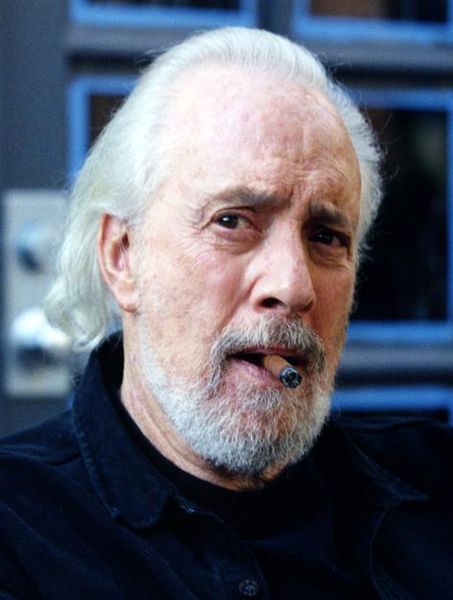
It remains one of the great screen entrances in movie history.
Near the end of To Kill a Mockingbird, director Robert Mulligan’s adaptation of Harper Lee’s controversial novel (adapted by Horton Foote), Jem (Philip Alford) is taking his sister Scout (Mary Badham) home from a school pageant when they’re attacked by Bob Ewell (James “Buddy” Anderson), a man who swore he’d get even with their father Atticus (Gregory Peck) for humiliating him in court (by showing he beat up and possibly raped his daughter, even though Tom Robinson (Brock Peters), a black man, was convicted of the crime). Sheriff Heck Tate (Frank Overton) questions Scout about what happened (Jem is unconscious after he broke his arm trying to protect Scout), and while Scout was limited by what she could see because of her costume, she tells the sheriff another man fought off Ewell, and looking around the room, she points to the corner behind the door, and says, “There he is, Mr. Tate, he can tell you his name.” She (and we) see a pale man with blond hair who looks wild and possibly unstable, but turns out to be less threatening than he appears, even smiling at Scout when she smiles and says, “Hey, Boo,” as she recognizes the man she and Jem have been trying to flush out for a long time. As it turns out, when it comes to Boo, while plenty of myths had sprung up about Boo, appearances prove to be deceiving, and Robert Duvall, who played Boo and who died on February 16 at the age of 95, made a specialty out of playing those types of characters.
Like Gene Hackman, one of his friends and contemporaries starting out, Duvall started out in the military (though he came by it from his father being in the Navy), joining the army when he was a private in the Army after the Korean War ended, though he would later make light about his service, saying he barely qualified as a private, first class. Besides, he would also claim the only thing he was good at, and the only thing he ever wanted to do, was act. He ended up going to the Neighborhood Playhouse School of the Theatre in the 1950’s, along with classmates like Hackman, James Caan, and Dustin Hoffman. Unlike Hoffman, who became a devotee of Lee Strasberg (arguably the most controversial teacher at the Actor’s Studio), Duvall became a pupil of Sanford Meisner, who taught his students (who also included Caan, Diane Keaton and Sydney Pollack) to live truthfully under imaginary circumstances, and worry more about listening to the other actors rather than using affective memory (Strasberg’s method). It was a method Duvall took to heart.
While rooming with Hackman and Hoffman, Duvall worked in both stage and on TV to pay the bills, but it was while he was at the Playhouse that he made the first of many associations throughout his career, with writer Horton Foote. A playwright who also ending up writing for TV, it was Foote who ended up recommending Duvall for the part of Boo Radley. Though he didn’t speak a single line of dialogue, and was only visible at the end, the success of the film (while it wasn’t a blockbuster, it made back over six times its budget, it was well-reviewed – though Pauline Kael, and in a retrospective review, Roger Ebert both said it was flawed – and was nominated for several Oscars, winning Best Actor for Peck) enabled Duvall to work steadily in film. Arthur Penn’s The Chase (1965), for me, is an overheated mess (though Penn and producer Sam Spiegel quarreled through filmmaking and Spiegel took the movie away from Penn in the editing room), but Duvall manages to stay realistic as the cuckolded husband of Janice Rule. Duvall had the small but crucial role of a cabbie who drives Steve McQueen around in Peter Yates’ Bullitt (1968). Although Duvall did not get along with director Henry Hathaway when making True Grit (1969), he’s one of the best parts of the movie as the outlaw Ned Pepper who nonetheless treats Mattie Ross (Kim Darby), the young woman out to avenge her father’s death, with respect.
It was around this time that Duvall made two more important professional associations. First was Robert Altman, who directed Duvall, Caan and Michael Murphy in Countdown (1967), a drama where the three play astronauts involved in a race to the moon. As the movie was taken away from Altman in the editing room by Jack Warner (who didn’t like the way Altman was already using overlapping dialogue), you can see the interference, but Duvall is certainly convincing as an astronaut. In 1969, Duvall made his second important professional association when he appeared in Francis Ford Coppola’s The Rain People as a motorcycle cop who finds himself in conflict with Caan (as a mentally challenged former football player) over a runaway housewife (Shirley Knight). I’ve never been a big fan of the movie – Coppola depicts both Caan and Knight’s characters in a simple-minded manner – but Duvall perks up the movie when he shows up, again by bringing a note of realism to the proceedings. It was his second movie with Altman, however, that got him even more attention, M*A*S*H (1970). While the movie may not be as well-remembered today as the long-running TV sitcom spin-off, it was the biggest hit of Altman’s career, allowing him to make movies without interference. Oddly enough, Duvall seems at first to be out of place here, playing the holier-than-thou Major Frank Burns realistically, rather than as the comic villain Larry Linville played on the show, but while his character exits the movie about halfway through, it ends up being a gamble that pays off, as he’s still the type of character Hawkeye (Donald Sutherland) is rebelling against (Duvall himself enjoyed making the film, not only because he liked the freedom Altman provided him and the other actors, but because he thought it was funny).

After appearing that same year in Paul Williams’ The Revolutionary, where he played the working-class leader of a revolutionary group joined by a radicalized college student played by Jon Voight (an odd fit for Duvall, given his real-life conservative politics, though he did his best with an unwritten role), Duvall teamed up with Coppola’s friend George Lucas for the futuristic drama THX 1138 (1971), a dystopian movie where he plays the title character, an android who gets involved with a female (Maggie McOmie) even though it’s against the law. Lucas’ movie didn’t do well when it came out with critics or audiences when it first came out, and it’s certainly a cold movie, but it’s a compelling one, and Duvall is one of the reasons it works so well. It was his second movie with Coppola, The Godfather (1972), that made Duvall a name.

When Claude and I talked about the Godfather trilogy, we concentrated on the work Gordon Willis did in photographing the trilogy, especially the famous wedding sequence that opens the first movie. However, we also talked about how, while Sofia Coppola’s performance as Mary in the third movie received the most criticism, it was the absence of Duvall as Corleone lawyer (and adopted son) Tom Hagen that hurt the third movie the most (Duvall decided not to return because they wouldn’t pay him enough). While Al Pacino (as Michael Corleone) gave my favorite performance in the trilogy (and his performance in the second movie is my favorite performance of all time), and Marlon Brando (as Vito in Part 1) and Robert De Niro (as Vito in Part 2) both won Oscars for their work, in a way, Duvall’s work as Hagen is the most crucial to the first two movies. Virgil Sollozzo (Al Lettieri) recognizes Tom isn’t in the violence end of the business, but he (and Coppola) also recognize the fact Tom is basically running that business, especially in the first movie when Vito gets shot. Tom may be affected by Vito getting shot like everyone else (and he’s certainly affected when Sonny gets killed), but he’s able to deal with the possibility of his loss in a completely dispassionate manner, just as he’s able to deal with Kay (Keaton) in both movies (when he wants to get in touch with Michael after he’s fled the country in the first movie, or leave the compound in the second) and a senate committee in the second movie (when Michael is being interrogated about his activities). Perhaps the best illustration of this comes in the second movie, when he visits Senator Geary (G.D. Spradlin), who had earlier threatened to squeeze Michael out of Nevada, in his bedroom when he’s been framed for murdering a prostitute. Tom is soothing towards the senator even as it’s obvious he’s also blackmailing him, and Duvall is able to embody smooth cruelty very well.

The same year Duvall appeared in the first Godfather movie, he also appeared in Phil Kaufman’s The Great Northfield Minnesota Raid (1972), his second movie western (after True Grit), which became his favorite genre. In this one, he plays Jesse James to Cliff Robertson’s Cole Younger, and while it travels well-worn territory, it’s a good movie, and allows Duvall to show more intensity than he had up to that point. It still wasn’t a leading role, but Duvall got his chance on that the following year with The Outfit, John Flynn’s underrated version of Donald E. Westlake’s Richard Stark novel. Unlike Point Blank, John Boorman’s baroque adaptation of the first Start novel (The Hunter) – which works as both allegory and crime film – Flynn’s movie is lean and mean, keeping in line with what Duvall does as Macklin (the Parker figure in the movie), who goes after the mob for killing his brother. Duvall’s isn’t the only memorable performance in the movie – there’s also Joe Don Baker (as Macklin’s friend Cody), Robert Ryan (as the main bad guy), Timothy Carey (as an associate of Ryan’s), Marie Windsor (as a bartender), Jane Greer (as Macklin’s sister-in-law), Richard Jaeckel (as a mechanic who knew Macklin’s brother) and Sheree North (as the mechanic’s wife) – but Duvall does a terrific job in both the action scenes and the dramatic ones (especially when he tries to comfort his sister-in-law while she makes it clear she wants nothing to do with him).

After a memorable cameo as The Director in Coppola’s The Conversation (which Coppola did in between the first two Godfather movies), Duvall teamed up again with James Caan in Sam Peckinpah’s The Killer Elite, which is ostensibly about to intelligence contractors who start out as friends but end up rivals, but which works best as an allegory about Peckinpah’s troubles with studios, and Duvall and Caan work well together. I don’t feel right taking about Duvall’s next two movies, The Eagle Has Landed (John Sturges’ adaptation of the Jack Higgins novel about a (fictional) plot to kidnap Churchill) and The Seven-Per-Cent Solution (Herbert Ross’ adaptation of Nicholas Meyer’s revisionist Sherlock Holmes novel) because I haven’t seen them in a long time and barely remember them, though I remember Duvall being restrained again as Dr. Watson. It was in Sidney Lumet’s Network (which Claude and I also already talked about) that allowed Duvall to show what he could do when he went over-the-top, as he did when his character, television executive Frank Hackett, was butting heads with Max Schumacher (William Holden) and Diana Christensen (Faye Dunaway), though he also shows restraint when he and Diana are discussing what to do with controversial news anchor Howard Beale (Peter Finch) at the end in a business-like tone, making him all the more horrifying.

After another small cameo (in Kaufman’s 1979 remake of Invasion of the Body Snatchers), Duvall went over-the-top again in what is arguably best-known performance, as Colonel Kilgore in Apocalypse Now, Coppola’s attempt to take Joseph Conrad’s novella Heart of Darkness and transplant it to the Vietnam War. Whatever you think of the movie – I think it works brilliantly until Marlon Brando shows up at the end as Kurtz; I think his performance only makes sense in Coppola’s Redux version – Duvall’s performance is undeniably a high point, as he commands the screen during the entire time Kilgore appears, whether he’s chewing out an interpreter for refusing to feed water to a prisoner (“Any man brave enough to fight with his guts strapped to him can drink from my canteen any day!”) to when he leads an air strike on a village just so his idol Lance (Sam Bottoms) can go surfing in the water by it (“Charlie don’t surf!”) to his most famous speech in the movie, when he’s telling his troops about an earlier mission he once fought in (“I love the smell of napalm in the morning”). Also in 1979 (though it wasn’t released in theaters until 1980) was one of the roles closest to Duvall’s heart, as Bull Meechum in The Great Santini, Lewis John Carlino’s adaptation of Patrick Conroy’s novel. Meechum is another military character, a Marine lieutenant in 1962 South Carolina, who is in conflict with his superior officers and his oldest son Ben (Michael O’Keefe). Much of the movie feels like warmed-over Southern melodrama, but again, Duvall holds the screen, especially in the movie’s most famous scene, a basketball scene between Bull and Ben where Bull refuses to declare Ben the winner. Duvall never sentimentalizes Bull, yet you can see how afraid he is of no longer being number 1.
After Duvall and De Niro both appeared in The Godfather Part II (though, of course, they didn’t share any scenes together), the two appeared together as brothers in True Confessions (1981), Ulu Grosbard’s film version of the novel by John Gregory Dunne (who also wrote the screenplay with his wife Joan). Loosely based on the infamous “Black Dahlia” murder (later immortalized in James Ellroy’s novel of the same name), the movie casts Duvall as the police detective brother of De Niro’s priest character. The first time I saw this movie, I couldn’t get into it, but when I watched it again recently, while I think Grosbard and Dunne weren’t able to stick the landing, I found the movie compelling otherwise. Duvall again has the role that allows him to go over-the-top, but he does so in character, nicely paired with De Niro’s underplaying.

1983 saw Duvall hit two milestones in his career. The first is when he won his only Oscar for best acting for his performance in Bruce Beresford’s Tender Mercies, written by Foote, where he played Mac, an alcoholic country singer (a genre Duvall was a fan of in real life) trying to connect with both Rosa Lee (Tess Harper), a widow and single mother. and with his estranged daughter Sue Anne (Ellen Barkin). Although this is one of the few Beresford movies I like (the others being Crimes of the Heart and Black Robe), he doesn’t give enough charge to the material, so it doesn’t go as deep as it should. Fortunately, though he and Duvall apparently didn’t get along during the making of the movie, he trusts Duvall, who is not only believable as a singer, but also as an alcoholic trying to put his life back together again. That same year, Duvall also made his feature directorial debut (he had earlier directed a documentary about a rodeo family called We’re Not the Jet Set) with Angelo, My Love. Duvall said he was inspired to make this movie about the gypsy subculture when he was walking to the theater and overheard a young boy saying, “Patricia. if you don’t love me no more, I’m gonna move to Cincinnati!” The result was an uneven but compelling look at the gypsy subculture in the U.S., showing Duvall’s curiosity about that subculture (the plot, involving two rivals, is the weak part of the film, with the portrayal of the subculture the best part).
Like many actors and directors who gained attention in the 1970’s, Duvall, though he worked steadily, wasn’t always able to find good roles in movies worthy of his talents, though with rare exceptions, he was good in whatever he appeared in. One of his rare missteps, in my opinion, came in The Natural (1984), Barry Levinson’s adaptation of Bernard Malamud’s novel, though, to be fair, no one comes off well in that movie for me except Wilford Brimley, Glenn Close, and Barbara Hershey (by casting Robert Redford as Roy Hobbs, Levinson turned the story of an ordinary guy who could hit the hell out of a baseball into a Christ allegory). Duvall played Max Mercy, a reporter suspicious of Hobbs, and it’s one of the few times he played the characters as one-note, which hurt the film. Dennis Hopper’s Colors (1988) and Tony Scott’s Days of Thunder (1990) both cast him as the wise older man serving as a mentor to a young hotshot (Sean Penn’s brash rookie police officer and Tom Cruise’s brash race car driver, respectively). At least in the former, whatever you may think of the portrayal of the drug war, Duvall (well-matched by Penn) makes the cliché of the old cop/young cop portrayal seem new again, whether he’s advising Penn on the best way to handle the gangs (with the tale of a bull advising his son on the best way to go after a herd of cows) or trying to defuse a situation with those gangs (Duvall comes off best with Trinidad Salva as the leader of a Mexican gang).
Though Volker Schlondorff’s The Handmaid’s Tale (1990), his adaptation of Margaret Atwood’s novel, seems to be pushed aside thanks to the TV show adaptation, I think it’s an honest, if not entirely successful, movie, thanks mostly to Natasha Richardson’s performance in the main role, but one shouldn’t count out Duvall’s work as The Commander, who represents the patriarchy of the movie. Unlike what he did as Max in The Natural, Duvall doesn’t play The Commander as a mustache-twirling villain, but as a true believer, making him even more dangerous. Similarly, the following year, in Martha Coolidge’s Rambling Rose (1991), Duvall plays what seems to be a stock role – the patriarch who is simultaneously repulsed by, and obsessed with, the title character (Laura Dern) – and makes it come alive, especially in his scenes with Dern.

Duvall always thought one of his best performances came in Randa Haines’ Wrestling Ernest Hemingway (1993), where he plays a retired Cuban barber who forms an unlikely friendship with a retired Irish sailor (Richard Harris). However, while I’ve liked Haines’ other movies (Children of a Lesser God), too often, it seems like the movie goes for easy moralizing, and Duvall gets stranded in that (it doesn’t help his Cuban accent isn’t convincing). Duvall comes off much better in two other movies that came out that year. Joel Schumacher’s Falling Down is best remembered today as a movie about the angry white man, though I don’t know if the movie is endorsing what D-Fens (Michael Douglas) is doing or appalled at what he’s doing. What I do know is the movie snaps into focus every time Duvall appears on screen as Prendergast, a detective on his last day investigating the carnage D-Fens has perpetuated. A man who’s scorned by his colleagues for being out of touch, and with a sickly wife (Tuesday Weld) whom he loves but can’t please, Duvall makes Prendergast someone who still retains knowledge and a moral code, yet never sentimentalizes him (watch his final scene with D-Fens’ daughter, when he claims his name will be Mud after his wife finds out he’s not quitting after all, or his scene with D-Fens where he tells D-Fens his troubles. Though there are many fans these days of Walter Hill’s Geronimo: An American Legend (from that same year), I’m not one of them, as this is yet another film about a non-white character (played well by Wes Studi in the title role) through the eyes of a white character (played by Matt Damon, back when I didn’t think much of him as an actor), and the one scene between Duvall (as Al Sieber, who tracks Native Americans for the U.S. Cavalry) and his friend Hackman (as Brigadier General George Crook) comes off flat. Nevertheless, Duvall is very good as the crafty Sieber, who is racist towards Native Americans, though he has a grudging respect towards Geronimo.

Except for another misfire, as Demi Moore’s cuckolded husband in Roland Joffe’s ill-advised Hawthorne adaptation The Scarlet Letter (1996), Duvall’s next few roles saw him take roles any actor of his age could have played and making them his own. Ron Howard’s The Paper (1994) intends to be a throwback to the fast-talking newspaper movies of the 1930’s and 40’s, and until it goes sentimental at the end, it mostly succeeds. As Bernie, the editor-in-chief of The New York Sun (which was fictional – then), Duvall gets saddled with the crusty old editor stereotype, one dealing with prostate cancer, as well as an estranged daughter (Jill Hennessy), but again, Duvall breaks through and makes it real, whether he’s pleading with his daughter to give him a chance, or commiserating with a city worker (Jason Alexander), not realizing the worker is gunning for one of Bernie’s reporters (Randy Quaid). He also keeps it real as Julia Roberts’ father in Lasse Hallstrom’s Something to Talk About (1995), who loves Roberts but gets exasperated by her sometimes. Duvall makes a sharp cameo appearance as the racist father of Karl (Billy Bob Thornton) in Sling Blade (1996), which Thornton also wrote and directed. And even though Jon Turteltaub’s Phenomenon (from that same year) is pretty much an apologia for Scientology, Duvall again lends a note of realism as a doctor friend of the main character, played by John Travolta.
Duvall followed that up with the third movie he ever directed, The Apostle (1997), which he also wrote, and always considered one of his best movies. i can’t quite get there – I think while it is accepting of other religions (E.F., the preacher character Duvall plays, goes to visit an all-black church and muses while they use different means, he and them essentially believe in the same thing), it’s also an apologia for fire-and-brimstone preaching, which I’m not a fan of. However, there’s little denying the charisma in Duvall’s performance, whether he’s leading his flock or talking down a racist (Thornton in a sharp cameo, returning the favor). You might have expected him to slow down after that, but the following year, he reteamed with Altman for The Gingerbread Man, a rare genre film for Altman where Duvall plays the hillbilly father of Embeth Davidtz, and is a lot craftier than meets the eye. That same year, Duvall was the best part of Mimi Leder’s Deep Impact, where he gives his astronaut character (sent to stop an incoming comet heading to Earth) a dignity the movie doesn’t deserve, and Steve Zaillian’s A Civil Action, based on a true story, where he’s very good as Jerome Facher, the wily lawyer opposing personal injury lawyer Travolta suing the company Duvall represents because Travolta claims the company poisoned the water. Duvall’s best moments come when he’s advising other lawyers in the firm how to obfuscate their opponent’s case by yelling, “Objection!” whenever possible (Facher even does this when he wakes up while in court).
Duvall continued to work steadily in the next two decades (including directing his fourth movie, The Assassination Tango (2002), which I never saw, and his fifth and final movie, Wild Horses (2015), which I also never saw), often being better than the movies he was in, such as the remake of Gone in 60 Seconds (2000), The 6th Day (from the same year, teaming him with Arnold Schwarzenegger), Kicking & Screaming (2005) – the Will Farrell soccer movie, not the Noah Baumbach movie – Lucky You (2007), We Own the Night (the same year), Crazy Heart (2009), The Road (the same year), Jack Reacher (2012), and The Judge (2014). Of the movies he did during this time, the only one I saw that I didn’t like was Thank You for Smoking (2005), Jason Reitman’s smug satire, and the two I liked the best were Aaron Schneider’s Get Low (2009) and Steve McQueen’s Widows (2013). For the former, he plays a hermit who requests a funeral party from the bemused Bill Murray, and again takes a conceit and makes it real, especially when Duvall’s character, Felix Bush, reconnects with Mattie (Sissy Spacek). For the latter, he plays the racist father of Colin Farrell’s candidate for alderman, and digs deep into the hateful nature of his character, again without sentimentalizing him. This was the last movie Duvall made that I saw, and it’s one of his best.

One genre Duvall returned to time and again, ever since True Grit, was the Western, and it was a genre he felt a particular affinity for (in an interview he gave late in his life, Duvall praised The Sopranos in comparison to the Godfather films, saying he thought the show got mobsters right, but was dismissive of Deadwood in relation to Westerns. I have not seen the latter, so I can’t comment), both in movies (Open Range) and on TV (Broken Trail). It was in a Western that Duvall gave one of his favorite performances, and my favorite performance of his, Lonesome Dove, adapted by director Simon Wincer and writer William Wittliff from the novel by Larry McMurtry. Duvall plays Augustus “Gus” McCrae, a retired Texas ranger living in the title town (a small town in Texas) who is content to do nothing more than drink, banter with whoever wants to banter with him (and even those who don’t, like best friend and fellow Texas Ranger Woodrow Call (Tommy Lee Jones), play cards, and buy time with prostitute Lorena Wood (Diane Lane). That’s until Jake Spoon (Robert Urich), another former Texas Ranger, comes to town while on the lam (for murder) and charms Lorena (into joining him) and Woodrow into driving the cattle he and Gus have all the way to Montana. Gus reluctantly joins along for the ride, which doesn’t turn out the way anyone expects.

Claude and I discussed this mini-series, which will air in a future episode, but what I want to emphasize is Duvall’s performance. Originally, Duvall was approached to play Woodrow, but Duvall’s then-wife Gail Youngs thought he should play Gus instead, and Duvall agreed, saying he had played parts like Woodrow already. While I occasionally wonder what it would have been like if Duvall and Jones had switched roles, I certainly agree Duvall is terrific as Gus. I also think while there’s definitely a gadfly nature to Gus that Duvall brings out (Gus etches out a Latin motto on his and Woodrow’s cattle company sign – “Uva Uvam Vivendo Varia Fit”, which is incorrect, by the way – and says any bandit who knows what it means is welcome to rob them), and Duvall is also good at showing how Gus is lazy enough to give the Dude a run for his money. However, there’s a lot more to Gus than that, and Duvall brings that out as well, such as the way he can handle himself in a fight (when Woodrow nearly beats a cavalry officer to death because the officer was beating Newt – who, though Woodrow won’t admit it, is his biological son – it’s Gus who manages to calm Woodrow down), his sentimental side (he starts weeping when he comes across a meadow where he and Clara (Anjelica Huston), the only woman he ever loved, once had a picnic), and his soft side (he’s the one who comforts Lorena after he rescues her from Blue Duck (Frederick Forest), who had kidnapped her and let her out to be raped). Duvall ended up winning a Golden Globe for his performance, and while I think Jones should have won (the series, and the novel, is really a tragedy in Western form about Woodrow), Duvall deserved the win. Even though he worked plenty before and after, Duvall’s performance as Gus is, for me, the crowning work of his long and illustrious career.