R.I.P., Robert Duvall

As Boo Radley in To Kill a Mockingbird.

It remains one of the great screen entrances in movie history.

Near the end of To Kill a Mockingbird, director Robert Mulligan’s adaptation of Harper Lee’s controversial novel (adapted by Horton Foote), Jem (Philip Alford) is taking his sister Scout (Mary Badham) home from a school pageant when they’re attacked by Bob Ewell (James “Buddy” Anderson), a man who swore he’d get even with their father Atticus (Gregory Peck) for humiliating him in court (by showing he beat up and possibly raped his daughter, even though Tom Robinson (Brock Peters), a black man, was convicted of the crime). Sheriff Heck Tate (Frank Overton) questions Scout about what happened (Jem is unconscious after he broke his arm trying to protect Scout),  and while Scout was limited by what she could see because of her costume, she tells the sheriff another man fought off Ewell, and looking around the room, she points to the corner behind the door, and says, “There he is, Mr. Tate, he can tell you his name.”  She (and we) see a pale man with blond hair who looks wild and possibly unstable, but turns out to be less threatening than he appears, even smiling at Scout when she smiles and says, “Hey, Boo,” as she recognizes the man she and Jem have been trying to flush out for a long time. As it turns out, when it comes to Boo, while plenty of myths had sprung up about Boo, appearances prove to be deceiving, and Robert Duvall, who played Boo and who died on February 16 at the age of 95, made a specialty out of playing those types of characters.

Like Gene Hackman, one of his friends and contemporaries starting out, Duvall started out in the military (though he came by it from his father being in the Navy), joining the army when he was a private in the Army after the Korean War ended, though he would later make light about his service, saying he barely qualified as a private, first class. Besides, he would also claim the only thing he was good at, and the only thing he ever wanted to do, was act. He ended up going to the Neighborhood Playhouse School of the Theatre in the 1950’s, along with classmates like Hackman, James Caan, and Dustin Hoffman. Unlike Hoffman, who became a devotee of Lee Strasberg (arguably the most controversial teacher at the Actor’s Studio), Duvall became a pupil of Sanford Meisner, who taught his students (who also included Caan, Diane Keaton and Sydney Pollack) to live truthfully under imaginary circumstances, and worry more about listening to the other actors rather than using affective memory (Strasberg’s method). It was a method Duvall took to heart.

While rooming with Hackman and Hoffman, Duvall worked in both stage and on TV to pay the bills, but it was while he was at the Playhouse that he made the first of many associations throughout his career, with writer Horton Foote. A playwright who also ending up writing for TV, it was Foote who ended up recommending Duvall for the part of Boo Radley. Though he didn’t speak a single line of dialogue, and was only visible at the end, the success of the film (while it wasn’t a blockbuster, it made back over six times its budget, it was well-reviewed – though Pauline Kael, and in a retrospective review, Roger Ebert both said it was flawed – and was nominated for several Oscars, winning Best Actor for Peck) enabled Duvall to work steadily in film. Arthur Penn’s The Chase (1965), for me, is an overheated mess (though Penn and producer Sam Spiegel quarreled through filmmaking and Spiegel took the movie away from Penn in the editing room), but Duvall manages to stay realistic as the cuckolded husband of Janice Rule. Duvall had the small but crucial role of a cabbie who drives Steve McQueen around in Peter Yates’ Bullitt (1968). Although Duvall did not get along with director Henry Hathaway when making True Grit (1969), he’s one of the best parts of the movie as the outlaw Ned Pepper who nonetheless treats Mattie Ross (Kim Darby), the young woman out to avenge her father’s death, with respect.

It was around this time that Duvall made two more important professional associations. First was Robert Altman, who directed Duvall, Caan and Michael Murphy in Countdown (1967), a drama where the three play astronauts involved in a race to the moon. As the movie was taken away from Altman in the editing room by Jack Warner (who didn’t like the way Altman was already using overlapping dialogue), you can see the interference, but Duvall is certainly convincing as an astronaut. In 1969, Duvall made his second important professional association when he appeared in Francis Ford Coppola’s The Rain People as a motorcycle cop who finds himself in conflict with Caan (as a mentally challenged former football player) over a runaway housewife (Shirley Knight). I’ve never been a big fan of the movie – Coppola depicts both Caan and Knight’s characters in a simple-minded manner – but Duvall perks up the movie when he shows up, again by bringing a note of realism to the proceedings. It was his second movie with Altman, however, that got him even more attention, M*A*S*H (1970). While the movie may not be as well-remembered today as the long-running TV sitcom spin-off, it was the biggest hit of Altman’s career, allowing him to make movies without interference. Oddly enough, Duvall seems at first to be out of place here, playing the holier-than-thou Major Frank Burns realistically, rather than as the comic villain Larry Linville played on the show, but while his character exits the movie about halfway through, it ends up being a gamble that pays off, as he’s still the type of character Hawkeye (Donald Sutherland) is rebelling against (Duvall himself enjoyed making the film, not only because he liked the freedom Altman provided him and the other actors, but because he thought it was funny).

As the title character in THX 1138.

After appearing that same year in Paul Williams’ The Revolutionary, where he played the working-class leader of a revolutionary group joined by a radicalized college student played by Jon Voight (an odd fit for Duvall, given his real-life conservative politics, though he did his best with an unwritten role), Duvall teamed up with Coppola’s friend George Lucas for the futuristic drama THX 1138 (1971), a dystopian movie where he plays the title character, an android who gets involved with a female (Maggie McOmie) even though it’s against the law. Lucas’ movie didn’t do well when it came out with critics or audiences when it first came out, and it’s certainly a cold movie, but it’s a compelling one, and Duvall is one of the reasons it works so well. It was his second movie with Coppola, The Godfather (1972), that made Duvall a name.

As Tom Hagen in the first Godfather movie.

When Claude and I talked about the Godfather trilogy, we concentrated on the work Gordon Willis did in photographing the trilogy, especially the famous wedding sequence that opens the first movie. However, we also talked about how, while Sofia Coppola’s performance as Mary in the third movie received the most criticism, it was the absence of Duvall as Corleone lawyer (and adopted son) Tom Hagen that hurt the third movie the most (Duvall decided not to return because they wouldn’t pay him enough). While Al Pacino (as Michael Corleone) gave my favorite performance in the trilogy (and his performance in the second movie is my favorite performance of all time), and Marlon Brando (as Vito in Part 1) and Robert De Niro (as Vito in Part 2) both won Oscars for their work, in a way, Duvall’s work as Hagen is the most crucial to the first two movies. Virgil Sollozzo (Al Lettieri) recognizes Tom isn’t in the violence end of the business, but he (and Coppola) also recognize the fact Tom is basically running that business, especially in the first movie when Vito gets shot. Tom may be affected by Vito getting shot like everyone else (and he’s certainly affected when Sonny gets killed), but he’s able to deal with the possibility of his loss in a completely dispassionate manner, just as he’s able to deal with Kay (Keaton) in both movies (when he wants to get in touch with Michael after he’s fled the country in the first movie, or leave the compound in the second) and a senate committee in the second movie (when Michael is being interrogated about his activities). Perhaps the best illustration of this comes in the second movie, when he visits Senator Geary (G.D. Spradlin), who had earlier threatened to squeeze Michael out of Nevada, in his bedroom when he’s been framed for murdering a prostitute. Tom is soothing towards the senator even as it’s obvious he’s also blackmailing him, and Duvall is able to embody smooth cruelty very well.

As Macklin in The Outfit.

The same year Duvall appeared in the first Godfather movie, he also appeared in Phil Kaufman’s The Great Northfield Minnesota Raid (1972), his second movie western (after True Grit), which became his favorite genre. In this one, he plays Jesse James to Cliff Robertson’s Cole Younger, and while it travels well-worn territory, it’s a good movie, and allows Duvall to show more intensity than he had up to that point. It still wasn’t a leading role, but Duvall got his chance on that the following year with The Outfit, John Flynn’s underrated version of Donald E. Westlake’s Richard Stark novel. Unlike Point Blank, John Boorman’s baroque adaptation of the first Start novel (The Hunter) – which works as both allegory and crime film – Flynn’s movie is lean and mean, keeping in line with what Duvall does as Macklin (the Parker figure in the movie), who goes after the mob for killing his brother. Duvall’s isn’t the only memorable performance in the movie – there’s also Joe Don Baker (as Macklin’s friend Cody), Robert Ryan (as the main bad guy), Timothy Carey (as an associate of Ryan’s), Marie Windsor (as a bartender), Jane Greer (as Macklin’s sister-in-law), Richard Jaeckel (as a mechanic who knew Macklin’s brother) and Sheree North (as the mechanic’s wife) – but Duvall does a terrific job in both the action scenes and the dramatic ones (especially when he tries to comfort his sister-in-law while she makes it clear she wants nothing to do with him).

As Frank Hackett in Network.

After a memorable cameo as The Director in Coppola’s The Conversation (which Coppola did in between the first two Godfather movies), Duvall teamed up again with James Caan in Sam Peckinpah’s The Killer Elite, which is ostensibly about to intelligence contractors who start out as friends but end up rivals, but which works best as an allegory about Peckinpah’s troubles with studios, and Duvall and Caan work well together. I don’t feel right taking about Duvall’s next two movies, The Eagle Has Landed (John Sturges’ adaptation of the Jack Higgins novel about a (fictional) plot to kidnap Churchill) and The Seven-Per-Cent Solution (Herbert Ross’ adaptation of Nicholas Meyer’s revisionist Sherlock Holmes novel) because I haven’t seen them in a long time and barely remember them, though I remember Duvall being restrained again as Dr. Watson. It was in Sidney Lumet’s Network (which Claude and I also already talked about) that allowed Duvall to show what he could do when he went over-the-top, as he did when his character, television executive Frank Hackett, was butting heads with Max Schumacher (William Holden) and Diana Christensen (Faye Dunaway), though he also shows restraint when he and Diana are discussing what to do with controversial news anchor Howard Beale (Peter Finch) at the end in a business-like tone, making him all the more horrifying.

As Colonel Kilgore in Apocalypse Now.

After another small cameo (in Kaufman’s 1979 remake of Invasion of the Body Snatchers), Duvall went over-the-top again in what is arguably best-known performance, as Colonel Kilgore in Apocalypse Now, Coppola’s attempt to take Joseph Conrad’s novella Heart of Darkness and transplant it to the Vietnam War. Whatever you think of the movie – I think it works brilliantly until Marlon Brando shows up at the end as Kurtz; I think his performance only makes sense in Coppola’s Redux version – Duvall’s performance is undeniably a high point, as he commands the screen during the entire time Kilgore appears, whether he’s chewing out an interpreter for refusing to feed water to a prisoner (“Any man brave enough to fight with his guts strapped to him can drink from my canteen any day!”) to when he leads an air strike on a village just so his idol Lance (Sam Bottoms) can go surfing in the water by it (“Charlie don’t surf!”) to his most famous speech in the movie, when he’s telling his troops about an earlier mission he once fought in (“I love the smell of napalm in the morning”). Also in 1979 (though it wasn’t released in theaters until 1980) was one of the roles closest to Duvall’s heart, as Bull Meechum in The Great Santini, Lewis John Carlino’s adaptation of Patrick Conroy’s novel. Meechum is another military character, a Marine lieutenant in 1962 South Carolina, who is in conflict with his superior officers and his oldest son Ben (Michael O’Keefe). Much of the movie feels like warmed-over Southern melodrama, but again, Duvall holds the screen, especially in the movie’s most famous scene, a basketball scene between Bull and Ben where Bull refuses to declare Ben the winner. Duvall never sentimentalizes Bull, yet you can see how afraid he is of no longer being number 1.

After Duvall and De Niro both appeared in The Godfather Part II (though, of course, they didn’t share any scenes together), the two appeared together as brothers in True Confessions (1981), Ulu Grosbard’s film version of the novel by John Gregory Dunne (who also wrote the screenplay with his wife Joan). Loosely based on the infamous “Black Dahlia” murder (later immortalized in James Ellroy’s novel of the same name), the movie casts Duvall as the police detective brother of De Niro’s priest character. The first time I saw this movie, I couldn’t get into it, but when I watched it again recently, while I think Grosbard and Dunne weren’t able to stick the landing, I found the movie compelling otherwise. Duvall again has the role that allows him to go over-the-top, but he does so in character, nicely paired with De Niro’s underplaying.

As Mac (with Tess Harper as Rosa Lee in the background) in Tender Mercies.

1983 saw Duvall hit two milestones in his career. The first is when he won his only Oscar for best acting for his performance in Bruce Beresford’s Tender Mercies, written by Foote, where he played Mac, an alcoholic country singer (a genre Duvall was a fan of in real life) trying to connect with both Rosa Lee (Tess Harper), a widow and single mother. and with his estranged daughter Sue Anne (Ellen Barkin). Although this is one of the few Beresford movies I like (the others being Crimes of the Heart and Black Robe), he doesn’t give enough charge to the material, so it doesn’t go as deep as it should. Fortunately, though he and Duvall apparently didn’t get along during the making of the movie, he trusts Duvall, who is not only believable as a singer, but also as an alcoholic trying to put his life back together again. That same year, Duvall also made his feature directorial debut (he had earlier directed a documentary about a rodeo family called We’re Not the Jet Set) with Angelo, My Love. Duvall said he was inspired to make this movie about the gypsy subculture when he was walking to the theater and overheard a young boy saying, “Patricia. if you don’t love me no more, I’m gonna move to Cincinnati!” The result was an uneven but compelling look at the gypsy subculture in the U.S., showing Duvall’s curiosity about that subculture (the plot, involving two rivals, is the weak part of the film, with the portrayal of the subculture the best part).

Like many actors and directors who gained attention in the 1970’s, Duvall, though he worked steadily, wasn’t always able to find good roles in movies worthy of his talents, though with rare exceptions, he was good in whatever he appeared in. One of his rare missteps, in my opinion, came in The Natural (1984), Barry Levinson’s adaptation of Bernard Malamud’s novel, though, to be fair, no one comes off well in that movie for me except Wilford Brimley, Glenn Close, and Barbara Hershey (by casting Robert Redford as Roy Hobbs, Levinson turned the story of an ordinary guy who could hit the hell out of a baseball into a Christ allegory). Duvall played Max Mercy, a reporter suspicious of Hobbs, and it’s one of the few times he played the characters as one-note, which hurt the film. Dennis Hopper’s Colors (1988) and Tony Scott’s Days of Thunder (1990) both cast him as the wise older man serving as a mentor to a young hotshot (Sean Penn’s brash rookie police officer and Tom Cruise’s brash race car driver, respectively). At least in the former, whatever you may think of the portrayal of the drug war, Duvall (well-matched by Penn) makes the cliché of the old cop/young cop portrayal seem new again, whether he’s advising Penn on the best way to handle the gangs (with the tale of a bull advising his son on the best way to go after a herd of cows) or trying to defuse a situation with those gangs (Duvall comes off best with Trinidad Salva as the leader of a Mexican gang).

Though Volker Schlondorff’s The Handmaid’s Tale (1990), his adaptation of Margaret Atwood’s novel, seems to be pushed aside thanks to the TV show adaptation, I think it’s an honest, if not entirely successful, movie, thanks mostly to Natasha Richardson’s performance in the main role, but one shouldn’t count out Duvall’s work as The Commander, who represents the patriarchy of the movie. Unlike what he did as Max in The Natural, Duvall doesn’t play The Commander as a mustache-twirling villain, but as a true believer, making him even more dangerous. Similarly, the following year, in Martha Coolidge’s Rambling Rose (1991), Duvall plays what seems to be a stock role – the patriarch who is simultaneously repulsed by, and obsessed with, the title character (Laura Dern) – and makes it come alive, especially in his scenes with Dern.

As Detective Prendergast in Falling Down.

Duvall always thought one of his best performances came in Randa Haines’ Wrestling Ernest Hemingway (1993), where he plays a retired Cuban barber who forms an unlikely friendship with a retired Irish sailor (Richard Harris). However, while I’ve liked Haines’ other movies (Children of a Lesser God), too often, it seems like the movie goes for easy moralizing, and Duvall gets stranded in that (it doesn’t help his Cuban accent isn’t convincing). Duvall comes off much better in two other movies that came out that year. Joel Schumacher’s Falling Down is best remembered today as a movie about the angry white man, though I don’t know if the movie is endorsing what D-Fens (Michael Douglas) is doing or appalled at what he’s doing. What I do know is the movie snaps into focus every time Duvall appears on screen as Prendergast, a detective on his last day investigating the carnage D-Fens has perpetuated. A man who’s scorned by his colleagues for being out of touch, and with a sickly wife (Tuesday Weld) whom he loves but can’t please, Duvall makes Prendergast someone who still retains knowledge and a moral code, yet never sentimentalizes him (watch his final scene with D-Fens’ daughter, when he claims his name will be Mud after his wife finds out he’s not quitting after all, or his scene with D-Fens where he tells D-Fens his troubles. Though there are many fans these days of Walter Hill’s Geronimo: An American Legend (from that same year), I’m not one of them, as this is yet another film about a non-white character (played well by Wes Studi in the title role) through the eyes of a white character (played by Matt Damon, back when I didn’t think much of him as an actor), and the one scene between Duvall (as Al Sieber, who tracks Native Americans for the U.S. Cavalry) and his friend Hackman (as Brigadier General George Crook) comes off flat. Nevertheless, Duvall is very good as the crafty Sieber, who is racist towards Native Americans, though he has a grudging respect towards Geronimo.

As editor-in-chief Bernie White (with Glenn Close as managing editor Alicia Clark) in The Paper.

Except for another misfire, as Demi Moore’s cuckolded husband in Roland Joffe’s ill-advised Hawthorne adaptation The Scarlet Letter (1996), Duvall’s next few roles saw him take roles any actor of his age could have played and making them his own. Ron Howard’s The Paper (1994) intends to be a throwback to the fast-talking newspaper movies of the 1930’s and 40’s, and until it goes sentimental at the end, it mostly succeeds. As Bernie, the editor-in-chief of The New York Sun (which was fictional – then), Duvall gets saddled with the crusty old editor stereotype, one dealing with prostate cancer, as well as an estranged daughter (Jill Hennessy), but again, Duvall breaks through and makes it real, whether he’s pleading with his daughter to give him a chance, or commiserating with a city worker (Jason Alexander), not realizing the worker is gunning for one of Bernie’s reporters (Randy Quaid). He also keeps it real as Julia Roberts’ father in Lasse Hallstrom’s Something to Talk About (1995), who loves Roberts but gets exasperated by her sometimes. Duvall makes a sharp cameo appearance as the racist father of Karl (Billy Bob Thornton) in Sling Blade (1996), which Thornton also wrote and directed. And even though Jon Turteltaub’s Phenomenon (from that same year) is pretty much an apologia for Scientology, Duvall again lends a note of realism as a doctor friend of the main character, played by John Travolta.

Duvall followed that up with the third movie he ever directed, The Apostle (1997), which he also wrote, and always considered one of his best movies. i can’t quite get there – I think while it is accepting of other religions (E.F., the preacher character Duvall plays, goes to visit an all-black church and muses while they use different means, he and them essentially believe in the same thing), it’s also an apologia for fire-and-brimstone preaching, which I’m not a fan of. However, there’s little denying the charisma in Duvall’s performance, whether he’s leading his flock or talking down a racist (Thornton in a sharp cameo, returning the favor). You might have expected him to slow down after that, but the following year, he reteamed with Altman for The Gingerbread Man, a rare genre film for Altman where Duvall plays the hillbilly father of Embeth Davidtz, and is a lot craftier than meets the eye. That same year, Duvall was the best part of Mimi Leder’s Deep Impact, where he gives his astronaut character (sent to stop an incoming comet heading to Earth) a dignity the movie doesn’t deserve, and Steve Zaillian’s A Civil Action, based on a true story, where he’s very good as Jerome Facher, the wily lawyer opposing personal injury lawyer Travolta suing the company Duvall represents because Travolta claims the company poisoned the water. Duvall’s best moments come when he’s advising other lawyers in the firm how to obfuscate their opponent’s case by yelling, “Objection!” whenever possible (Facher even does this when he wakes up while in court).

Duvall continued to work steadily in the next two decades (including directing his fourth movie, The Assassination Tango (2002), which I never saw, and his fifth and final movie, Wild Horses (2015), which I also never saw), often being better than the movies he was in, such as the remake of Gone in 60 Seconds (2000), The 6th Day (from the same year, teaming him with Arnold Schwarzenegger), Kicking & Screaming (2005) – the Will Farrell soccer movie, not the Noah Baumbach movie – Lucky You (2007), We Own the Night (the same year), Crazy Heart (2009), The Road (the same year), Jack Reacher (2012), and The Judge (2014). Of the movies he did during this time, the only one I saw that I didn’t like was Thank You for Smoking (2005), Jason Reitman’s smug satire, and the two I liked the best were Aaron Schneider’s Get Low (2009) and Steve McQueen’s Widows (2013). For the former, he plays a hermit who requests a funeral party from the bemused Bill Murray, and again takes a conceit and makes it real, especially when Duvall’s character, Felix Bush, reconnects with Mattie (Sissy Spacek). For the latter, he plays the racist father of Colin Farrell’s candidate for alderman, and digs deep into the hateful nature of his character, again without sentimentalizing him. This was the last movie Duvall made that I saw, and it’s one of his best.

As Gus McCrae (with Tommy Lee Jones as Woodrow Call) in Lonesome Dove.

One genre Duvall returned to time and again, ever since True Grit, was the Western, and it was a genre he felt a particular affinity for (in an interview he gave late in his life, Duvall praised The Sopranos in comparison to the Godfather films, saying he thought the show got mobsters right, but was dismissive of Deadwood in relation to Westerns. I have not seen the latter, so I can’t comment), both in movies (Open Range) and on TV (Broken Trail). It was in a Western that Duvall gave one of his favorite performances, and my favorite performance of his, Lonesome Dove, adapted by director Simon Wincer and writer William Wittliff from the novel by Larry McMurtry. Duvall plays Augustus “Gus” McCrae, a retired Texas ranger living in the title town (a small town in Texas) who is content to do nothing more than drink, banter with whoever wants to banter with him (and even those who don’t, like best friend and fellow Texas Ranger Woodrow Call (Tommy Lee Jones), play cards, and buy time with prostitute Lorena Wood (Diane Lane). That’s until Jake Spoon (Robert Urich), another former Texas Ranger, comes to town while on the lam (for murder) and charms Lorena (into joining him) and Woodrow into driving the cattle he and Gus have all the way to Montana. Gus reluctantly joins along for the ride, which doesn’t turn out the way anyone expects.

Claude and I discussed this mini-series, which will air in a future episode, but what I want to emphasize is Duvall’s performance. Originally, Duvall was approached to play Woodrow, but Duvall’s then-wife Gail Youngs thought he should play Gus instead, and Duvall agreed, saying he had played parts like Woodrow already. While I occasionally wonder what it would have been like if Duvall and Jones had switched roles, I certainly agree Duvall is terrific as Gus. I also think while there’s definitely a gadfly nature to Gus that Duvall brings out (Gus etches out a Latin motto on his and Woodrow’s cattle company sign – “Uva Uvam Vivendo Varia Fit”, which is incorrect, by the way – and says any bandit who knows what it means is welcome to rob them), and Duvall is also good at showing how Gus is lazy enough to give the Dude a run for his money. However, there’s a lot more to Gus than that, and Duvall brings that out as well, such as the way he can handle himself in a fight (when Woodrow nearly beats a cavalry officer to death because the officer was beating Newt – who, though Woodrow won’t admit it, is his biological son – it’s Gus who manages to calm Woodrow down), his sentimental side (he starts weeping when he comes across a meadow where he and Clara (Anjelica Huston), the only woman he ever loved, once had a picnic), and his soft side (he’s the one who comforts Lorena after he rescues her from Blue Duck (Frederick Forest), who had kidnapped her and let her out to be raped). Duvall ended up winning a Golden Globe for his performance, and while I think Jones should have won (the series, and the novel, is really a tragedy in Western form about Woodrow), Duvall deserved the win. Even though he worked plenty before and after, Duvall’s performance as Gus is, for me, the crowning work of his long and illustrious career.

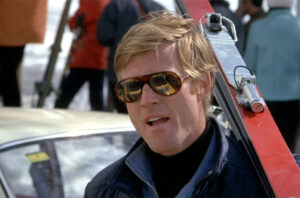
In Memoriam – Robert Redford

As the Sundance Kid in his breakout role.

Early in Butch Cassidy and the Sundance Kid, directed by George Roy Hill and written by William Goldman, there’s a blackjack game happening in a bar between a couple of players. The man dealing the cards, a blond-haired man with a mustache, has been winning hands, and one of the players, Macon, accuses the other man of cheating. That’s when Butch (Paul Newman) comes in trying to defuse the situation. However, Macon won’t let them leave without the money the other man has, while the other man insists he wasn’t cheating, and even when Butch tries to get Macon to ask them to stick around, that doesn’t help. Finally, Butch says to the other man, “Can’t help you, Sundance.” That’s when Macon becomes nervous, claiming he didn’t know who Sundance was when he accused him of cheating, and finally agrees to ask Butch and Sundance to stick around. Butch uses that cue to tell Macon they have to be going. As Butch and Sundance leave, Macon asks the latter, “How good are you?” That’s when Sundance turns around, quickly shoots off Macon’s gun belt, and shoots it across the floor. In his book Adventures in the Screen Trade (the paperback edition of the book includes the complete screenplay), Goldman wrote the purpose of the scene was to introduce audiences to the Sundance Kid and his importance to the story, but it also served as a way for Robert Redford, who played Sundance, and who died on September 16 at the age of 89, to announce he was someone to be reckoned with, which he would prove not just as an actor, but also as a director and as the head of one of the most influential film festivals of the last 40 years or so.

While Redford, who was born in Santa Monica, California but moved between California and Texas (where his father worked) as a kid, originally wanted to be an athlete, he gravitated towards the arts, studying both painting and acting in New York (after getting kicked out of the University of Colorado, where he studied for a year and a half). Like many struggling actors at the time, he worked in both theater (his big break came in the Neil Simon play Barefoot in the Park) and television (I haven’t seen the Twilight Zone episodes Redford appeared in, but they’re well-regarded). He also appeared in several movies in the 1960’s, including the movie version of Barefoot in the Park (while Redford reprised his role from the play, Jane Fonda, in the third of four movies she’s do with Redford, stepped in for Elizabeth Ashley), which came out in 1967. Before that, Redford made two pictures that began two important associations in his career. Inside Daisy Clover (1965), where he played a bisexual character, co-starred Natalie Wood, who not only co-starred with him in other films, but also worked on others and became a good friend.  The following year brought This Property is Condemned, which the first time Redford worked with director Sydney Pollack (they had met in 1962 on Redford’s first movie, War Hunt). However, while most of these roles seemed to play into Redford’s talent for comedy, like many other comedies in the dying days of the Code era, they came across as desperate rather than funny (Redford’s one stab at a serious movie during that time, Arthur Penn’s The Chase (1966), was a mess, though not Redford’s fault).

It wasn’t until Butch Cassidy and the Sundance Kid, which came out in 1969, that Redford finally broke through in film. The movie isn’t perfect – the score by Burt Bacharach (including the Oscar-winning song “Raindrops Keep Falling on my Head,” performed by B.J. Thomas) seems out of place, and some of the dialogue is too smart-ass – but Redford manages to play both the toughness of the role (the poker scene) and the comedy of the role (when Sundance refuses at first to dive into the waterfall with Butch – to escape the Super Posse pursuing them – because, “I CAN’T SWIM!”), and he and Newman, in the first of two movies they did together, both work well, reflecting the real-life friendship they developed. 1969 was also important for Redford in other ways.

As David Chappellet in Downhill Racer.

One of the knocks Redford would endure over the years is how, as an actor, he wouldn’t take on roles that worked against his “image,” preferring to play it safe (he was also turned down for roles because of this; Mike Nicholas, who directed Redford in the stage version of Barefoot in the Park, wouldn’t cast him as Benjamin Braddock in The Graduate because he didn’t think Redford would be turned down by a woman). That knock wasn’t entirely deserved. The same year Butch came out, Redford appeared in another Western, Tell Them Willie Boy is Here, the first movie Abraham Polonsky directed since being blacklisted (his last film as director was the 1948 movie Force of Evil, though he had co-written the Don Siegel  cop drama Madigan, from 1968). An allegorical film (Redford plays a sheriff named Cooper, clearly modeled on Gary Cooper), the film can be heavy-handed at times, but Redford leans into the politics of the movie, not the last time he would do so. That same year, Redford also worked behind the camera for the first time, starring in and producing Michael Ritchie’s Downhill Racer, the first of two movies the two did together. In this film, Redford played David Chappellet, who’s competing for the Winter Olympics in downhill skiing. At first glance, it may seem like Redford may be playing into his image, as Chappellet is a winner, as well as a glamour figure who gets involved with other women (Wood, who appears in one of the crowd scenes, also served as an uncredited production assistant). However, Chappellet is arrogant about the sport, with his other teammates (putting him in conflict with Eugene Claire (Gene Hackman), his coach), and the women in his life, and though he ends up winning at the end, the movie doesn’t set him up for a phony redemption. Redford does a good job portraying all of that, so Chappellet doesn’t just come off as a hotshot skier.

As Bill McKay in The Candidate.

While The Hot Rock (1972), Peter Yates’ underrated adaptation of Donald E. Westlake’s first Dortmunder novel, showed Redford’s comic side to good effect (Goldman adapted the novel), especially in his first scene (when the warden about to release Dortmunder asks him to go straight for a change, Dortmunder responds, “My heart wouldn’t be in it, Frank”), it wasn’t a hit at the box office. That same year, Redford continued to stretch. Jeremiah Johnson was another western that reteamed him with Pollack, but while this biopic about the titular mountain man, co-written by John Milius, did well at the box office and earned decent reviews, it had too much of the macho posturing Milius was fond of for my taste, and while Redford was clearly comfortable playing an outdoorsman, he seemed uncomfortable with that posturing (John Huston’s The Life and Times of Judge Roy Bean, which came out that same year and was also co-written by Milius, plays better for me because Huston and Newman, cast in the title role, kidded that posturing). Much better, for me, was The Candidate, from that same year, which reteamed him with Richie and played into Redford’s politics. He plays Bill McKay, the title character, who runs for senator of California (against a Republican incumbent who’s considered a sure thing) just so he can say want he wants, only to watch as Marvin Lucas (Peter Boyle), a political consultant running the campaign, forces him to tone down his beliefs, which leads him to winning the election, leading to the memorable last line, “What do we do now?” Redford again plays both the comedy of the situation (the scene where he rails against the triteness of his speeches while riding in a limo) and the drama (he looks genuinely unnerved at the end), which helps make the movie (sharply written by Jeremy Larner and directed by Ritchie) all the more effective.

As Johnny Hooker (reteaming with Paul Newman,, as Henry Gondorff) in The Sting.

The following year, 1973,  brought forth two of Redford’s biggest hits, both of which had him working with familiar people. The Sting reunited him with Hill and Newman for a period comedy where he plays Johnny Hooker, a con artist whose mentor Luther Coleman (Robert Earl Jones) is murdered by gangster Doyle Lonnegan (Robert Shaw) after Hooker and Coleman inadvertently con one of Lonnegan’s men out of a lot of money. Hooker ends up working with an old associate of Coleman’s, Henry Gondorff (Newman), to try and con Lonnegan out of his money. While Redford was criticized in some quarters for being too old to play Hooker, he brings an insouciant charm to the role (as when he’s trying to pretend he’s betraying Gondorff, known to Lonnegan as “Shaw,” to Lonnegan) along with a real anger (when he tells Gondorff he’s going to get Lonnegan because he doesn’t know enough about killing to kill him). The movie was slammed in some quarters for being just a copy of Butch Cassidy and the Sundance Kid, but in my opinion, it’s much better.

As Hubbell, with Barbra Streisand as Kate, in The Way we WEre.

Later that year, Redford teamed up with Pollack on their third movie together with The Way we Were, where he plays Hubbell, a writer who becomes involved with Kate (Barbra Streisand), a politically-minded former classmate of his (the movie takes place before and after World War II). I must confess I’m not a big fan of this movie; I’ve never been a fan of Streisand, and while I think she plays the role rather stridently, Arthur Laurents (who adapted his own novel for the screen) also writes her in a one-note fashion (Pollack and Laurents also lose their way when depicting those fighting against anti-McCarthyism). On the other hand, while Redford is playing a character he’d play again – the man who doesn’t commit politically even though he loves someone who does – he makes him self-aware. Kate, who was initially dismissive of Hubbell in college, starts to take him seriously when their teacher reads aloud an essay where Hubbell describes how easy things came to him, and the way Redford reacts during that scene shows a self-awareness and a reluctance to draw attention to himself.

The following year saw Redford appear as the title character as Jack Clayton’s adaptation of F. Scott Fitzgerald’s The Great Gatsby. While I’ve said before how I try not to be someone who automatically feels “the book was better” when it comes to movie adaptations, I also must admit I haven’t liked any of the movie versions of Fitzgerald’s novel that I’ve seen, from the 1949 version (directed by Elliot Nugent, with Alan Ladd in the title role), to the 2013 version (directed by Baz Luhrmann, with Leonardo DiCaprio in the title role) to this version. Redford certainly looks glamorous enough to play Gatsby, but he seems ill at ease the entire time he’s on screen (whatever the faults of the 2013 version, which were many in my opinion, DiCaprio never had that problem). Goldman would later claim Francis Ford Coppola’s adaptation of the novel was wonderful but Clayton did a poor job directing the material; for me, despite good performances by Sam Waterson as Nick Carraway and Lois Chiles as Jordan Baker, the whole thing comes off as a botch job.

As Turner in Three Days of the Condor.

As in 1973, Redford reunited with Hill (for the third and final time) and Pollack (for the fourth time) in 1975. For Hill, Redford played the title character in The Great Waldo Pepper, a tribute to barnstorming pilots, written by Goldman and Hill. Goldman would claim the movie didn’t connect with audiences because they never forgave the fact Redford, as Pepper, failed to save a woman’s (Susan Sarandon) life during a flying stunt, which is too bad as I think it’s underrated, a very good portrait of the cost of chasing dreams when you may have outgrown them, and Redford is good at playing the boyishness of Pepper’s early years as a pilot to his weariness after Pepper has faded into obscurity. For Pollack, Redford switched gears for the thriller Three Days of the Condor, adapted from James Grady’s novel Six Days of the Condor. Redford plays Joe Turner, a reader for the CIA (or a CIA front) who comes back from getting lunch for his colleagues at work one day only to discover they’ve all been murdered, and his own bosses may have been involved. While the movie has rightly come under fire for the Stockholm-syndrome romance plotline – Turner becomes briefly involved with Katherine Hale (Faye Dunaway), a photographer he kidnaps when he needs a place to lay low – Pollack makes the rest of the movie a taut and enjoyable thriller. Redford’s not the standout of the movie for me – that’s Max Von Sydow as Joubert, the blissfully amoral professional killer who tries to kill Turner but ends up helping him instead (“I don’t interest myself in ‘why.’ I think more often in terms of ‘when,’ sometimes ‘where,’ always ‘how much.'”) – but Redford again shows believable anger (especially when he chews out Higgins (Cliff Robertson), one of his bosses at the CIA, when he founds out how deeply Higgins was involved with what happened) and manages to be convincing as someone who’s a hero because they’re able to think on their feet, not because of any physical acts.

As Bob Woodward, with Dustin Hoffman as Carl Bernstein, in All the President’s Men.

Like other actors in the 1970’s, Redford had become active politically, though he kept a lower profile than people like Warren Beatty and Jane Fonda. But he saw a chance to combine politics and movies in 1976 with Alan J. Pakula’s All the President’s Men. I wrote about this movie several years ago for a blogathon, but I’ll just say the movie depends in large part on the relationship between Bob Woodward (Redford) and Carl Bernstein (Dustin Hoffman), and Redford and Hoffman make that work wonderfully. The following year, Redford was part of an all-star cast (including Michael Caine, Hackman, and Laurence Olivier) who appeared in Richard Attenborough’s World War II epic A Bridge Too Far, and while this movie didn’t work for me (it’s an anti-war movie, yet it seems to glorify violence), Redford does his best with his role as Julian Cook, who led a river crossing during the Battle of Arnhem.

In 1979, Redford teamed with Pollack for the fifth time, as well as Fonda for the first time since Barefoot in the Park, for The Electric Horseman, and then a year later appeared as the title character in Brubaker, directed by Stuart Rosenberg (taking over when original director Bob Rafelson was fired by the studio). In the former, a romantic drama, Redford played “Sonny” Steele, a rodeo champion turned spokesman who decides to steal the horse used in a commercial he’s supposed to appear in, with Fonda playing a reporter who covers his story and later falls in love with him. As with Absence of Malice, which Pollack made two years later with Newman (Sally Field played the reporter in that one), Pollack isn’t able to combine the romance with the message, and both seemed somewhat half-baked (even though he and Fonda do have good chemistry together). The latter finds Redford as a prison warden who goes undercover at first to discover conditions at the prison and then, once he announces himself as the warden (the best scene in the movie), tries to reform it, to no avail. While Redford spars well with Jane Alexander (who plays Lilian, a PR specialist with the governor, who agrees with Brubaker on the problems with the prison but not on how to solve them), and the criticism of for-profit prisons is sadly relevant today, the movie often makes its characters too one-note, and Redford is often too strident in the role.

As an actor, the 1980’s were a good time for Redford on a financial scale, but I don’t think they were on an artistic one, as he seemed to be afraid to go past his image (and not just the movies he did; Redford got let go from The Verdict before Paul Newman and director Sidney Lumet signed on because he wanted to make the main character, an alcoholic lawyer, more likable). First came The Natural (1984), Barry Levinson’s adaptation of the novel by Bernard Malamud, where Redford plays the title character, Roy Hobbs, a baseball player who, 16 years after getting shot, gets a position on the New York Knights (managed by Pop Fisher, played by Wilford Brimley) because he can hit the hell out of the ball. I’m afraid as with The Great Gatsby, this is another case where I thought the novel was better; Malamud wrote Roy Hobbs as an ordinary guy who just happened to be a talented hitter, and by casting Redford, Levinson destroyed the point of the story by making Hobbs a heroic character. Good performances by Brimley, Glenn Close (as Iris, Hobbs’ childhood love interest), Robert Duvall (as Max, a reporter who wants to bring Hobbs down), and Richard Farnsworth (as Red, Pop’s coach) can’t mitigate what Levinson does to the story. Redford then teamed up with Pollack for the sixth time for Out of Africa (1985), the only other Best Picture winner besides The Sting that Redford appeared in, but this docudrama about Karen Blixen (the pseudonym for Isak Dinesen) and her time in Africa. Redford is miscast as Denys, a British man Karen falls in love with, though he is convincing as a big game hunter. Also, the movie suffers from being more interested in the scenery than the characters, not to mention how it seems to celebrate colonialism. The following year, Redford appeared in Legal Eagles (1986), Ivan Reitman’s attempt to show he could make something besides a gag-heavy comedy. Redford, playing Tom Logan, a prosecutor who ends up helping Laura Kelly (Debra Winger), a defense attorney with her client Chelsea (Daryl Hannah), an accused arsonist, has great chemistry with Winger (in a rare comedy), but the movie is too plot-heavy and strains credulity. However, by this time, Redford had already moved into a other crucial phase of his career.

In 1980, Redford took his shot at directing with Ordinary People, an adaptation of the Judith Guest novel about Conrad (Timothy Hutton), a Midwestern teen struggling with feelings of guilt after his brother died in a boating accident (Conrad tried to kill himself because of it) as well as his relationships with Beth (Mary Tyler Moore), his mother, who wants to pretend like the whole thing never happened (and who, as it turns out, loved Conrad’s brother more than she loves Conrad) and Calvin (Donald Sutherland), his father, who wants to help Conrad but isn’t sure how. Unlike his acting work in the rest of the decade, Redford (along with screenwriter Alvin Sargent) seems willing to dig deep into the emotional lives of the characters (especially the final scene between Conrad and Dr. Berger, his psychiatrist, played by Judd Hirsch). The movie has since been pilloried by those who cite it as yet another example of the Best Picture Oscar going to the wrong picture and stealing it from a more deserving winner (Martin Scorsese’s Raging Bull). While I do on balance prefer Raging Bull, I do think Ordinary People is still a terrific movie.

Directing Christopher Walken (Montana) in The Milagro Beanfield War.

Redford didn’t direct another movie until 1988 with The Milagro Beanfield War, an adaptation of the John Nichols novel (which Nichols shared screenplay credit on with David S. Ward)  It tells the tale of Joe Mondragon (Chick Vennera), an out-of-work handyman who, disgusted by his inability to get a job working on the golf course millionaire Ladd Devine (Richard Bradford) is working on (which will drive up the rents and other prices for the residents of Milagro in New Mexico), accidentally kicks a pipe near his father’s old field, leading it to flood, and leading Joe to plant beans on the field. This pits him and the other villagers (eventually) against Devine and the forces he tries to line up against Mondragon, including Montana (Christopher Walken), a government agent intent on getting Devine. Unlike Ordinary People, the movie was not well-received (Roger Ebert gave it a mixed review), nor did it do well at the box office, but I think this is Redford’s most underrated movie as a director. While he’s aiming to make a comedy here, Redford doesn’t sugarcoat the issues, or let the scenery overwhelm the characters. Plus, unlike many movies about non-whites of the time, Redford doesn’t put a white character at the center (there are white characters who help, like Charlie Bloom (John Heard), an ex-lawyer turned newspaper editor whom Ruby (Sonia Braga), the local activist, often has to goad into taking action, and Herbie Platt (Daniel Stern), a sociology student who ends up help Mondragon, but they aren’t the story), and arguably, the main character is Amarante (Carlos Riquelme), Mondragon’s elderly father (though Redford does err in not casting a Latino-American as Mondragon). It’s the rare Capra-esque movie that both feels honest (instead of cloying) and is good to boot.

As Martin, with Ben Kingsley as Cosmo, in Sneakers.

In 1990, Redford teamed with Pollack for the seventh and final time. Havana is basically a rip-off of Casablanca set in 1958 Cuba, with Redford as Jack, a professional gambler who is gearing up for a big game but ends up helping Roberta (Lena Olin), wife of Cuban revolutionary Arturo (an uncredited Raul Julia). Pollack and Redford are treading familiar ground here, but perhaps since Pollack has cast the movie so well – Alan Arkin (as Joe, a casino owner and old friend of Jack’s), Tomas Milian (as a colonel in the secret police), Tony Plana (as Julio, a reporter friend of Jack’s), Mark Rydell (in a memorable cameo as real-life gangster Meyer Lansky), and Richard Farnsworth (as an elderly gambler and mentor to Jack) all acquit themselves well – it goes down pretty well, and Redford seems completely at ease in his role. Another familiar tale Redford helped make work was Sneakers (1992). Redford plays Martin Bishop, a former computer hacker who now runs a team of security analysts (they break into places to discover how secure they are, and then advise those places how to beef up their security) who’s forced to work for the NSA to steal a black box from Janek (Donal Logue), only to find out (a) the box is actually the ultimate code-breaker, and (b) the true mastermind is Cosmo (Ben Kingsley), Martin’s old friend (whom Martin thought was dead), who wants to use the box to crash the economy. Director Phil Alden Robinson manages the serious aspects and the fun aspects of the movie well, and except for Kingsley (who does an annoying American accent), Redford and the rest of the cast (including Sidney Poitier as an ex-CIA agent, Dan Aykroyd as “Mother,” a conspiracy-minded technology expert, David Strathairn as Whistler, a blind hacker, and Mary McDonnell as Liz, a piano teacher and Martin’s ex-girlfriend) work together well.

The following year, however, brought the nadir of Redford’s acting career. For those who have (mercifully) blocked it out, Adrian Lyne’s Indecent Proposal is the one where Redford plays John Gage, a billionaire who offers David (Woody Harrelson) and Diana Murphy (Demi Moore) $1 million (to help make them financially solvent after they lose everything first in the real estate market and then in Vegas) to sleep with Diana. This was sold as being controversial, but Lyne, who mostly came from the Cecil B. DeMille school of filmmaking (shoving sin in your face and then wagging his finger at you for enjoying it) makes sex, or the idea of it, boring (even my mother, who reluctantly watched the movie because she’s a fan of Redford, found the movie boring), with only Oliver Platt (as Gage’s lawyer) showing any vitality. Lyne even has Gage rip off a moment from Citizen Kane late in the movie. To Redford’s credit, while he’s a complete stiff in the role, he would later disparage the movie and his performance. Also, around that time, his career as director was still flourishing.

Redford’s third movie as director, A River Runs Through It (1992) (adapted from the short story by Norman Maclean), which he also narrated, was dismissed by Rayanne Graf on My So-Called Life when she said, “Isn’t it that boring movie with all the fishing?” However, this tale of two brothers – Norman (Craig Sheffer) and Paul (Brad Pitt) – in 1920’s Montana who share little except a love of fly-fishing is a well-delineated study of brotherly conflict, as well as an authentic-feeling portrait of the time. In addition, Redford gets good performances out of his cast, including Sheffer, Pitt, Tom Skerrit (as their Presbyterian minister father) and Emily Lloyd (as Jessie, a woman Norman falls in love with). Redford and cinematographer Phillipe Rousselot also do a good job not letting the scenery overwhelm the story.

Ralph Fiennes as Charles Van Doren in Quiz Show.

Even better, however, was Redford’s follow-up movie as director, Quiz Show (1994), adapted from Richard Goodwin’s book Remembering America: A Voice from the Sixties. Even if you don’t buy Redford’s notion that the quiz show scandals of the 1950’s – when it was revealed quiz shows such as Twenty-One (the show that’s the focus of the movie) fed its contestants the answers ahead of the show – were when we lost our innocence as a country, he still manages to make this a crackling entertainment. He and cinematographer Michael Ballhaus evoke the period without fetishizing it, screenwriter Paul Attanasio writes both crackling dialogue and pungent scenes (such as when Dan Enright (David Paymer), one of the producers of Twenty-One, refuses to admit to Goodwin (Rob Morrow), who’s investigating the show on behalf of Congress, the network knew the contestants were being fed the answers), and he gets great performances out of his cast. Though Morrow, Paymer, John Turturro (as Herbert Stempel, who blew the whistle on the quiz shows when he was told by the network to take a dive so the show could get a new winner), Hank Azaria (as Albert Freedman, another producer), and Mira Sorvino (as Goodwin’s wife) are all terrific (as is Martin Scorsese, in a rare performance in someone else’s film, as Martin Rittenhome, head of Geritol, which sponsored Twenty-One), but the acting honors go to Ralph Fiennes as Charles Van Doren, the most popular of the show’s contestants (and the longest-running) and Paul Scofield as Mark Van Doren, his professor father. Echoing The Way we Were, Charles, as he testifies before Congress at the end, admits that everything came too easy to him, and Fiennes plays up Charles’ intellectual glamor while also realizing the lies he’s telling (the main conflict of the movie, played well, is while Goodwin has more in common with Stempel than with Charles, he admires Charles but is embarrassed by Stempel), while Scofield is masterly at playing someone who loves his son (and is as intellectually rigorous as he is), but doesn’t understand him.

Another knock against Redford was, as he got older, he continued to play characters younger than he was and who got romantically involved with women much younger. Jon Avnet’s Up Close & Personal (1996) is loosely based on Alanna Nash’s book about TV anchor Jessica Savitch (called Tally in the movie, and played by Michelle Pfeiffer), but got turned around somehow into a quasi-remake of A Star is Born (John Gregory Dunne, one of the credited writers on the film, would later write a book about the experience called Monster). It’s a ridiculous story – Redford plays Warren, a news producer who becomes Tally’s mentor and later lover, but who doesn’t go as far as she does because of his integrity, which would be admirable in real life, but Avnet doesn’t handle it believably. However, despite the age difference, Redford and Pfeiffer have enough chemistry to make the movie pass the time (good supporting performances by Stockard Channing, Joe Mantegna and Kate Nelligan, among others, helps).

As Tom, with Scarlet Johansson as Grace, in The Horse Whisperer.

Redford’s next film as an actor, The Horse Whisperer (1998), was also the first time he had ever directed himself in a movie, adapting the novel by Nicholas Evans. Redford plays the title character, Tom Booker, who’s living with his brother Frank (Chris Cooper) and his family in Montana when Annie MacLean (Kristin Scott Thomas), her daughter Grace (Scarlett Johansson), and their horse Pilgrim show up from New York. Grace had ridden Pilgrim one morning with her friend Judith (Kate Bosworth) when they got into an accident that killed Judith (and her horse) and badly injured Grace (she has to use a prosthetic leg) and Pilgrim. Annie wants Tom, who she thinks helps people with horse problems (Tom corrects her by saying he helps horses with people problems), to help make Pilgrim better, and the movie is smart enough not to explain that if Tom helps Pilgrim, he’ll also be helping Grace, who’s become moody and withdrawn since the accident (partly due to what she feels is her mother bossing her around, and partly because she feels guilty, and we find out why later). Redford is at his best in the movie when he’s trying to help Pilgrim (using, as far as I can tell, plain horse sense) and when he’s bonding with Grace (and while Johansson is playing a more opening emotional character than she usually does, she’s terrific). It’s the romance between Tom and Annie that doesn’t always come off well (though as with his adaptation of The Bridges of Madison County, Richard LaGravenese, who’s credited on the script with Eric Roth, does a good job paring down the novel’s excesses), not helped by the fact Redford was at least a decade older than Scott Thomas (though she does a good job as Annie).

Still, The Horse Whisperer was a pretty good movie, which is more than can be said of Redford’s next movie as director, The Legend of Bagger Vance. Admittedly, the fact I’ve never been a fan of golf doesn’t help, but this movie about Rannulph (Matt Damon), a golfer and WWI veteran who reluctantly agrees to play a golf match featuring Walter Hagen (Bruce McGill) and Bobby Jones (Joel Gretsch) indulges in a lot of cliches about the sport, including the mysticism. Worse, Redford and screenwriter Jeremy Leven make the title character (played by Will Smith) nothing more than a one-note “Magical Negro” stereotype. Ironically, as he stumbled with directing, Redford started to take more chances as an actor, even if the movies weren’t always successful.

As Nathan, with Brad Pitt as Tom, in Spy Game.

The Last Castle (2001), directed by Rod Lurie, had Redford as Lt. General Irwin, who’s been sent to military prison for defying presidential orders to send his men on a rescue mission in Burundi, which ended up with eight of his soldiers being killed. The main thrust of the movie is the conflict between Irwin and Col. Winter (James Gandolfini), head of the prison.. Like all the movies Lurie did that I’ve seen, it’s rather obvious and heavy-handed (you can tell Winter is the jealous type because he listens to music by Salieri, Mozart’s rival), but as with The Contender and this, Lurie does get to you, thanks to getting good work out of his cast, especially Redford playing a man who may be in the right but is also willing to manipulate others to get them to do right (Gandolfini, who took the movie because he was a big fan of Redford’s, is equally good as a man who does evil things because he’s terrified of being exposed as a fraud). That same year saw Redford acting with Pitt in Tony Scott’s Spy Game. As Nathan Muir, a CIA agent, Redford shows himself again to be a master manipulator as he tries to arrange for his protégé Tom Bishop (Pitt) to be rescued from a Chinese prison (even though his superiors don’t want this to happen) while pretending to help by telling them about Bishop’s file. Redford gives a completely relaxed performance as Muir, but he’s also convincing as a hard-bitten realist until his change of heart at the end. Scott, as usually, indulges in too much trick camerawork, but most of the time, he’s content to let the story tell itself and to follow the actors, resulting in an entertaining movie. In producer Pieter Jan Brugge’s directorial debut, The Clearing (2004), Redford plays Wayne, a business executive kidnapped by Arnold (Willem Dafoe), a former employee of his. The kidnapping part is the weakest part of the movie, as Brugge is frustratingly opaque in these scenes, but Redford works well with Dafoe, keeping up with him every step of the way, and playing the arrogance of his character quite well. And while Lasse Hallstrom’s An Unfinished Life (2005) is, like many of his English-language movies, a high-toned soap opera (though I liked Something to Talk About and much of The Cider House Rules), Redford not only lets himself look his age as Jennifer Lopez’s estranged father-in-law, he really plays the anger of the role (though he has more relaxed moments, as when his granddaughter (Becca Gardner) wonders if he’s gay).

As Professor Malley, with Andrew Garfield as Todd, in Lions for Lambs.

In 2007, Redford turned back to directing with Lions for Lambs, which he also appeared in along with Meryl Streep and Tom Cruise. 2007 was the year Hollywood finally decided to confront the Iraq War (documentary filmmakers and filmmakers from other countries, of course, had already confronted the war), but those movies (including Paul Haggis’ In the Valley of Elah, Brian De Palma’s Redacted, and Gavin Hood’s Rendition) were all flawed, and Redford’s movie was no exception. The Afghanistan scenes, where Arian (Derek Luke) and Ernest (Michael Pena) are two American soldiers trapped behind enemy lines, feel fake, like they were shot in a studio (writer Matthew Michael Carnahan had originally wanted to do it as a play), and you sometimes get the uncomfortable feeling Redford is pulling a “When I was your age” act on a younger audience. Nevertheless, Redford and Carnahan are willing not just to go after those who waged the war, but also those who could have done more try and stop it, but didn’t, especially in the media. Redford also especially is on his directing game in the scenes with Cruise (as Jasper Irving, a Republican senator who claims to have a “new” strategy to win the war) and Streep (as Janine Roth, a writer interviewing Irving), both terrific. Finally, while it may come off as yet another elder mythologizing the 1960’s, the scene where Professor Stephen Malley (Redford) tries to get his student Todd (Andrew Garfield) to do more has lines that still hit me (“Rome is burning, son!”).

As Nick Sloan in The Company you Keep.

If Lions for Lambs was Redford’s flawed but interesting attempt to confront the Iraq War, The Conspirator (2010), based on the true story of Mary Surratt (Robin Wright), the only woman charged in the Lincoln assassination, was his attempt to make an allegory about how the U.S. had changed after 9/11. Unfortunately, it was also his directorial nadir, as every single character was one-note, Redford’s filmmaking was ham-fisted, and no one came across well (the normally reliable Kevin Kline, as Secretary of War Edwin Stanton, came across the worst). Much better was the movie that proved to be his last as director, The Company You Keep (2012). Redford plays Jim Grant, a lawyer who goes on the run when it comes out he’s really Nick Sloan, a former member of the Weather Underground who’s suspected of being involved in a bank robbery where a police officer was killed. Redford cast Shia LaBeouf as Ben Shepard, the reporter who exposes and then tries to track down Sloan, and he’s the weakest part of the movie, hitting only the obvious notes in his performance. However, Redford and writer Lem Dobbs (adapting a novel by Neil Gordon) overall do a good job dealing with the legacy of the 1960’s, Redford mostly avoids the “When I was your age” attitude that sometimes crept up in Lions for Lambs, and he gets good performances out of the rest of his cast, especially Brendan Gleeson as a policeman with a guilty secret and Susan Sarandon as another former Weather Underground member whose arrest kickstarts the plot.

As Alexander Pierce in Captain America: Winter Soldier.

While The Company You Keep was a box office success, Redford decided to turn back to acting for other people. First up came J.C. Chandor’s All is Lost (2013), which is basically Redford on a boat dealing with calamity after calamity after he inadvertently runs it into a stray cargo container. I don’t love the movie as much as others do – I had the uneasy feelings critics were fetishizing the movie because there’s almost no dialogue, as if dialogue by definition always ruins movie – but again, there’s no question for someone accused of caring too much about his image, Redford is willing to let himself go and play without vanity. While Redford had been willing to play unlikable characters, Captain America: The Winter Soldier (2014), directed by Anthony & Joe Russo, saw him play his first villain, as Alexander Pierce, one of the heads of S.H.I.E.L.D., but who is secretly the head of HYDRA, a Nazi organization Steve Rogers (Chris Evans) had fought in WWII (in the first Captain America movie). In interviews, the Russo brothers claim they were influenced by 70’s conspiracy thrillers, which I don’t buy – the point of those movies is you weren’t always sure who to trust and who was your enemy, whereas it’s pretty obvious who the enemy is here – and when it becomes an action movie, it looks like all other comic-book movies, but Redford is terrific as Pierce because he never plays him as a villain, even when he’s exposed, but as someone who is a true believer.

After this, Redford played real-life figures for the first time since Out of Africa. In A Walk in the Woods (2014), he plays Bill Bryson, a real-life travel writer, who decides to walk the Appalachian Trail, accompanied by Stephen Katz (Nick Nolte, whom Redford had directed in The Company You Keep). Director Ken Kwapis plays the comedy too broadly, and as Bryson’s wife, Emma Thompson was wasted on her role, but Redford and Nolte work well together. The following year, Redford took on another real-life figure with Truth, albeit in a more dramatic turn. The film, written and directed by James Vanderbilt, was the true story how “60 Minutes” initially reported then-president George W. Bush had received preferential treatment while in the National Guard during the Vietnam War, told through the yes of Mary Mapes (Cate Blanchett), the producer who ended up losing her job after producing the segment. Vanderbilt’s point, a valid one, was the story was valid and CBS rushed the story before they could get complete validation and then let Mapes and Dan Rather (Redford), who reported the story, hang out to dry. Unfortunately, Vanderbilt makes his points in an obvious way, and unlike another journalism movie from that year, Spotlight, he mythologizes his characters, negating the fine work done by the cast, especially Blanchett. As for Redford, while he doesn’t look or sound like Rather, he is convincing as an anchor.

As Forrest Tucker, with Sissy Spacek as Jewel, in The Old Man & the Gun.

Redford then made his last filmmaking relationship with director David Lowery. First, Lowery cast him in a remake of the Disney live-action film Pete’s Dragon (2016). While Redford likely took on the role of Conrad – father of Grace (Bryce Dallas Howard), whose son Pete (Oakes Fegley) befriends a dragon in the forest – because he had sympathy with the movie’s ecological theme (Redford was an environmentalist), this also manages to be the rare Disney live-action children’s movie that doesn’t talk down to its audience, and Redford seems happy to play a supporting role. His second, and last, film with Lowery was also his last film (not counting a cameo in Avengers: Endgame), The Old Man & the Gun (2018), where he played Forest Tucker, a career criminal who was as famous for escaping from prison as he was for his exploits, though the film narrows its focus to when Tucker, in his 70’s, develops a relationship with Jewel (Sissy Spacek), a widow, and trying to evade capture from Detective John Hunt (Casey Affleck), who has a sneaking admiration for him. This may be the most relaxed Redford has ever appeared on screen, and the role seems to fit him like a glove. Lowery hypes the story a little bit near the end, but overall, this is a very entertaining film.

While Redford acted in movies for merely 60 years, and directed them in over 40 (he also narrated such documentaries as Incident at Oglala, directed by Michael Apted, about Native Americans – particularly Leonard Peltier – accused of killing FBI agents, and was an executive producer on such movies as Tamara Jenkins’ Slums of Beverly Hills), for me, his biggest legacy when it comes to movies is the fact he founded the Sundance Institute, which started in 1981, where older filmmakers could help new independent filmmakers improve their craft and compete for financial assistance, and as one of the founders of the Utah/Us Film Festival, which would later be known as the Sundance Film Festival. When the latter was started in 1978, it was originally known for showing older movies, but starting in 1981, the festival started to showcase new, independent films and documentaries, and while the emphasis was on American films, the festival also made room for films from other countries. Also, unlike Hollywood for many years, Sundance welcomed movies from women, non-white filmmakers, and LGBT filmmakers. Among the movies we’ve discussed on our show that appeared at the festival are Return of the Secaucus Seven, Ruby in Paradise, Y Tu Mama Tambien, and in upcoming episodes, Big Night and Memento. The Sundance Film Festival was one of the major factors in the independent film movement breaking out after sex, lies and videotape won the main prize at the 1989 festival, and it’s the main reason why there are still movies other than the latest sequel, reboot or remake being made or shown. That, even more than the films Redford acted in and/or directed, is what made Redford such an important figure and why he will be missed.

Top 10 (well, 11) Movies Of The 21st Century

This past week, The New York Times published a list of what their critics consider the 100 best movies of the 21st Century, with Parasite topping the list. At a cursory glance, I’ve seen 97 of the 100 on the list, and probably agree with a number of them. I myself did not participate in the poll (which was open to readers) because (a) I no longer subscribe to The New York Times (they normalized the current occupant of the White House, which I find intolerable), and (b) more to the point, as per usual, I was unable to narrow my list to 10. However, I’m happy to play along, so here are my choices of the top 10 (well, 11) of the 21st century. If Claude and I talked about them, I will include a link to that podcast episode:

(1) The Tree of Life (2011) (Terrence Malick) (link to follow)

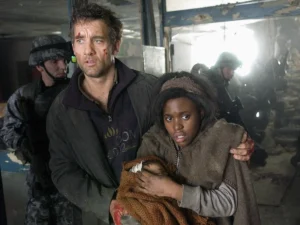
(2) Children of Men (2006) (Alfonso Cuaron)

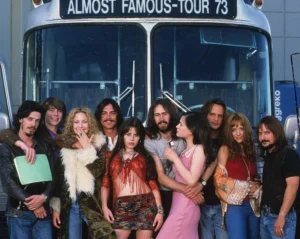
(3) Almost Famous (2000) (Cameron Crowe)

(4) Zero Dark Thirty (2012) (Kathryn Bigelow)

(5) Drive My Car (2021) (Ryusuke Hamaguchi)

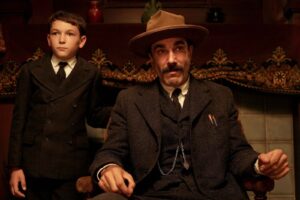
(6) There Will Be Blood (2007) (Paul Thomas Anderson)

(7) Roma (2018) (Alfonso Cuaron)

(8) (tie) Broker (2022) (Hirokazu Kore-eda), Parasite (2018) (Bong Joon-Ho)


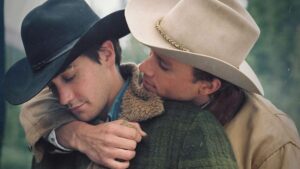
(9) Brokeback Mountain (2005) (Ang Lee)

(10) La La Land (2016) (Damien Chazelle) (to be discussed in an upcoming episode, where we will also be talking about The Independent)

R.I.P., Gene Hackman

Ever since the movies became a business in the U.S. (which started way back in the silent era), the men behind them sold an image not only of the U.S., but of glamour and beauty, which extended to the people that appeared on-screen. Many of the best movies ever made in Hollywood then (and even now), to be sure, featured glamorous-looking men and women doing glamorous things. Yet at the same time, during the studio era, there was also room for character actors (men and women) who could work with those glamorous men and women and hold their own with them. As the studio era ended in the 1960’s, there were more and more movies being made by people who, instead of casting the glamorous-looking men and women in leading roles, cast people who looked like the character actors in leading roles (regrettably, this was mostly white men), and some of those who looked like character actors could hold the screen like those leading men and women of the studio era. One of the best in that category was Gene Hackman, who died February 26 of this year at the age of 95.

Hackman had said he knew he wanted to be an actor ever since he was 10 and had become a fan of movies, particularly ones with James Cagney and Errol Flynn, his favorite actors, though it took him a while to get there. A couple of years after his parents divorced (his father left them), he joined the Marines (after lying about his age), serving for four and a half years (after WWII) in China, Hawaii, and Japan. After working in various jobs in New York, he attended the University of Illinois on the G.I. Bill, where he studied journalism and TV production before dropping out and moving to Los Angeles. There, he got involved in theater at the Pasadena Playhouse and met Dustin Hoffman, who remained a close friend for the rest of his life. Hackman and Hoffman often mentioned they were both voted “Least Likely to Succeed” by their classmates, he worked odd jobs when he couldn’t get acting gigs, and for the next several years, he got guest roles on such TV shows as The Defenders and Naked City and bit roles in movies such as Lilith and Hawaii. It was his bit part in the former, however, that would eventually change Hackman’s life.

As Buck Barrow with his brother Clyde (Warren Beatty) in Bonnie & Clyde.

Though Lilith was not a big hit, Warren Beatty, who was the star, remembered and liked working with Hackman, so when he was finally able to get Bonnie & Clyde made, Beatty convinced director Arthur Penn to cast Hackman as Clyde Barrow’s brother Buck (in one of those tantalizing what-could-have-been twists, Hackman was also originally cast as Mr. Robinson in The Graduate, which would have put him opposite Hoffman, but director Mike Nichols fired him about three weeks into rehearsal for being too young). Claude and I have already talked about Bonnie & Clyde, and while Hackman’s not the best reason to see the movie, he brings a bolt of energy to it whenever he’s on-screen, from when Buck first appears while reuniting with Clyde all the way until his death scene. The movie also shows one of Hackman’s most distinctive traits, his laugh, which is hearty in this performance, but would later become a chuckle that Hackman could make inviting or threatening. Beatty and Faye Dunaway (Bonnie) may have emerged as the stars of the movie, but Hackman proved he could hold his own with them.

As Eugene Claire, coach to David Chappellet (Robert Redford), in Downhill Racer.

Being older than Hoffman (as well as their mutual friend Robert Duvall, whom they both lived with for a time when all three were struggling actors), Hackman was already being cast in authority figures. One of the best of these was as the ski coach in Downhill Racer, Michael Ritchie’s terrific drama about downhill skiing. As Eugene Claire (Eugene was Hackman’s real first name), coach to the title character, David Chappellet (Robert Redford), Hackman was playing what at first seemed to be the stock role of the coach who tries to teach the maverick athlete to be a team player. It’s what Hackman does with the role that makes it interesting. As you might expect from this type of movie (though it’s not an “inspirational” sports movie, as Chappellet is a jerk who never gets redeemed at the end), Claire has a few speeches (“No one races unless I say so. That’s why I’m here. That’s why they made me the coach”), but what makes them work is Hackman never feels he has to prove his authority. He just delivers the speeches without any bull, whether talking with Chappellet, the other skiers on the team, or making his pitch to sponsors. When writing about Uncommon Valor, one of those “we-could-have-won-in-Vietnam-if-it-wasn’t-for-the-goddamn-liberals” movies that was so popular during the Reagan era,  Pauline Kael wrote Hackman “offers a range of held-in, adult emotion that you don’t expect”, and that could also describe his performance here.

As Popeye Doyle in The French Connection.

Though Hackman would also show he was capable of playing a less flamboyant role with his performance in Gilbert Cates’ I Never Sang for my Father (a stagy but compelling adaptation of the play by Robert Anderson, with strong performances by Hackman – possibly channeling his feelings towards his own father – Melvin Douglas, and Estelle Parsons, doing better here, in my opinion, than when she had played Hackman’s wife in Bonnie & Clyde), it was playing another authority figure that finally made him a star. A lot has been written about Hackman’s turn in William Friedkin’s The French Connection, including how Friedkin had been turned down several times when trying to cast the role of maverick detective Popeye Doyle, how Hackman took the role because he thought it would let him emulate Cagney, and how he quickly became uncomfortable with the violence of Popeye’s world. Still, no matter what you think of the film – though I’m far from being a fan of Friedkin, I do agree this is one of his best films, even if, like other movies of the time, its casual acceptance of the drug war as a good thing doesn’t age well for me – Hackman’s performance as Popeye remains one of the best of his career. You can see the charge Hackman brings to the role, such as when Popeye’s confusing a suspect by saying he’s going to nail him “for picking your feet in Poughkeepsie”, or, during the famous car chase scene, how he reacts when he’s trying to avoid pedestrians on the road, or when he’s playing cat-and-mouse with Charnier (Fernando Rey), the main bad guy, at the subway station. But while Popeye the character may have been brutal, again, Hackman made him seem real instead of just another macho action hero.

As Max in Scarecrow.

While I’m afraid I’m not a fan of Hackman’s turn as the minister who sacrifices himself to save other passengers in the disaster movie The Poseidon Adventure (Hackman himself would admit it was a “money job”), the next few years brought some of his best performances. He reunited with Ritchie for Prime Cut, a bizarre but compelling crime drama where he played Mary Ann, a crooked meatpacker who crosses paths with mob enforcer Devlin (Lee Marvin), and his go-for-broke performance not only fits with the tone of the film, but matches well against Marvin’s quiet but powerful one. Hackman also worked well as a crooked cop blackmailing singer and former drug dealer Kris Kristofferson into dealing again in Bill L. Norton’s underrated Cisco Pike. And he showed he could also be funny in a scene-stealing cameo as the blind hermit in Mel Brooks’ loving parody of Universal Horror films, Young Frankenstein. However, it was three other films Hackman did during this period – Jerry Schatzberg’s Scarecrow in 1973,  Francis Ford Coppola’s The Conversation in 1974, and Arthur Penn’s Night Moves in 1975 – that represented the peak of his career.

As Harry Caul in The Conversation.

In the first, Hackman plays Max, an ex-con who’s trying to hitchhike to Pittsburgh to set up a car wash business, and ends up with Francis (Al Pacino), a former sailor trying to get to Detroit to see his son. As with many of his roles at the time, Hackman is playing big, whether he’s pausing before getting up from the kitchen table until he belches, or fighting with the same convict (Jerry Reed) who beat up Francis, or dancing in a bar to the tune of the song “The Stripper”, but again, it all seems natural rather than showing off, and it’s balanced against more quiet moments, as when he reacts to Francis having a nervous breakdown at the end. By contrast, in the second, Hackman plays Harry Caul, a surveillance expert who tries his best not to get involved with anything except his work, and who tries not to give anything away about his life until he gets involved in the case involving the couple (Frederic Forrest and Cindy Williams) he’s investigating. Most of Hackman’s performances, before and afterwards, depended on his physicality, but as Harry, Hackman is incredibly still, both with his facial expressions and the way he holds himself together, especially when being challenged or threatened (especially by one of his employers, played by Harrison Ford, or a rival surveillance expert played by Allan Garfield). The only thing that gives Harry any spark in his life is his love of jazz, whether he’s listening to it or playing along on his saxophone, and you see that spark in him, even at the end, when Hackman’s playing the sax in resigned acceptance of his fate. Finally, in the third, Hackman plays Harry Moseby, an ex-football player turned private eye who’s hired to find the missing daughter (Melanie Griffith) of an ex-actress (Janet Ward) and finds himself mixed up in murder and smuggling. Penn’s film is just now getting remembered as one of the best of the revisionist private eye movies of the 1970’s, and Hackman not only brings out the physicality of the role (as when he tangles with a young James Woods as Griffith’s friend), but also makes it believable Moseby is in over his head in every way.

As Harry Moseby in Night Moves.

Though all three movies were well-reviewed (and Hackman would consider the first two his favorite performances), none of them did well at the box office (though all three have gained in reputation over the years), which not only left Hackman depressed, but led him to take more of what he called “money jobs.” He turned down roles in such films as One Flew Over the Cuckoo’s NestClose Encounters of the Third Kind and Ordinary People (the one movie he regretted turning down) to star in movies such as Lucky Lady (directed by Stanley Donen), The Domino Principle (directed by Stanley Kramer), and March or Die (directed by Dick Richards), all considered career nadirs (Zandy’s Bride, which teamed him with director Jan Troell and actress Liv Ullmann, was a misfire, but not a money job – I haven’t seen Richard Brooks’ western Bite the Bullet, but Hackman thought a scene he did with Candace Bergen represented the best acting of his career, and Roger Ebert praised it). The first two Superman movies (shot simultaneously, though Richard Lester reshot much of the second one over Hackman’s objections) were also movies Hackman considered money jobs, and led him to retire from acting temporarily. In addition, I must confess I’ve never been a fan of Hackman’s conception of Lex Luthor as a comic villain (Clancy Brown’s voice performance of Luthor in Superman: The Animated Series and the two Justice League series’ that followed remains my favorite incarnation of the character). Still, there’s no denying Hackman does play the comedy well, from the chuckle he gives when Miss Tessmacher (Valerie Perrine) insults him, or the way he underplays his reaction when he sees Otis (Ned Beatty), his bumbling sidekick, has made a claim to part of his territory, or, in the second movie, when he double-crosses Superman (Christopher Reeve) and then, when it turns out Superman was counting on that in order to defeat Zod (Terrence Stamp), pretends it was all part of his plan.

As Lex Luthor in Superman II.

Hackman was lured back to acting in 1981 with two roles. In the romantic comedy All Night Long, directed by Jean-Claude Tramont, he plays the night manager of a drugstore who becomes involved with the lonely wife (Barbra Streisand) of a firefighter. While the movie has its fans (including Kael), I confess it doesn’t quite work for me, though you can tell Hackman was invested in the material. Hackman then reunited with Beatty for Reds, his flawed but compelling look at the Communist revolution in the early years of the Soviet Union, and brings a charge to his scenes with Beatty as a former editor to John Reed (author of Ten Days That Shook the World). After that, with the exception of Under Fire and No Way Out (1987)both of which Claude and I talked about – Hackman’s output in the rest of the decade, like other actors who broke through during the “New Hollywood” movement of the 1970’s, didn’t live up to his ability. I must admit it’s not entirely fair to lump Nicholas Roeg’s Eureka into that category, given it was taken away from him in the editing room, but while Hackman is good in the movie as usual, it’s a mess. I know there are fans of David Anspaugh’s Hoosiers, but I’m not one of them, though as with Uncommon Valor, Hackman’s underplaying makes his performances work, even if the movies don’t work for me. While in Bud Yorkin’s Twice in a Lifetime, Hackman played a part mirroring his own life – his character leaves his wife (Ellen Burstyn) for another woman (Ann-Margaret), though in real life, Hackman had gotten divorced before finding another woman – the movie is a paper-thin exploration of that. While Woody Allen’s Another Woman is the best of his Bergman homages, it only works thanks to the performances of such actors as Gena Rowlands (in the lead), Ian Holm (as her cold husband), and Hackman (as his best friend and the one she realizes she really loves). And Power (Sidney Lumet’s big business drama), Target (a spy thriller that reunited him with Penn), and Full Moon in Blue Water (a rare comedy that reunited him with his The Conversation co-star Teri Garr) were missed opportunities.

AS Anderson (with Brad Dourif as Deputy Sheriff Pell) in Mississippi Burning.

One of the ironies of Hackman’s career is while in real life he abhorred violence (he was a registered Democrat, though he admitted to admiring Ronald Reagan), most of his most famous roles involved his character committing violent acts. That was also true of the movie that earned him his fourth Oscar nomination (after Bonnie & ClydeI Never Sang for my Father, and The French Connection, which earned him his first win, for Best Actor),  Alan Parker’s Mississippi Burning. I confess this is another film I’ve never been a fan of, as I feel it’s yet another movie about civil rights told from the point of view of whites and that diminishes African-Americans, it’s insulting in how it makes the FBI the heroes, given how much director J. Edgar Hoover loathed civil rights leaders, and with the exception of R. Lee Ermey’s mayor character, all the villains are portrayed as one-dimensional cartoons (though Brad Dourif, as usual, does a lot with a little). Given all that, I will admit the one good thing the movie does is its portrayal of the relationship between Hackman (as Anderson, a former southern sheriff turned FBI agent) and Frances McDormand (as the lonely wife of Dourif’s deputy sheriff Pell). Hackman believes McDormand knows something about the murder of three civil rights workers, so he talks to her at the beauty parlor she goes to, or her home, and Hackman shows his feelings for her again without overplaying (Parker, who rewrote Chris Gerolmo’s screenplay, had added a sex scene between the characters, but Hackman wisely talked him out of it). As for that violence, one of the most memorable scenes in the movie is when Anderson takes revenge on Pell for brutally beating his wife while in the barbershop, and while Parker overdoes the scene in shooting it, Hackman is utterly convincing the way he turns on a dime from being cheerful to intimidating and then violent.

As Sheriff Little Bill Daggett in Unforgiven.

It was the reception to that scene – being the scene shown by the studio when promoting Hackman’s performance for the Oscars – that led Hackman to turn down directing an adaptation of Thomas Harris’ The Silence of the Lambs after he initially agreed to do it. It also led him to initially turn down Clint Eastwood’s offer to play Little Bill, the sheriff who runs his town with a iron fist, in Unforgiven (before that, Hackman appeared in three good, if not great, movies – The Package, Andrew Davis’ Cold War thriller where Hackman is pitted against Tommy Lee Jones, Postcards from the Edge, Mike Nichols’ adaptation of Carrie Fisher’s semi-autobiographical novel, where Hackman lends a charge to his two scenes as a film director, and Class Action, a rare case where Hackman played a character close to his political views (a crusading lawyer), and where he and Mary Elizabeth Mastrantonio, as his estranged daughter, made what could be routine material work). But when Eastwood, who had also made his name with violent movies (the Man with No Name trilogy and the Dirty Harry movies), convinced Hackman the movie – about Will (Eastwood), a reformed killer brought out of retirement to claim a bounty a group of prostitutes have taken on a cowboy who roughed one of them up – would be interrogating that violence, Hackman signed on, earning his second Oscar (for Best Supporting Actor) in the process. Little Bill doesn’t tolerate vigilantism in his town, but what makes Hackman’s performance resonate is the lengths he’ll go to stop that violence, from the way he humiliates English Bob (Richard Harris), a gunfighter whose reputation outstrips his abilities, or the way he beats Ned (Morgan Freeman), Will’s friend, or the way he humiliates Will. While I still think Jaye Davidson should have won that year (and don’t love Unforgiven the way others do), Hackman’s performance is one of his best.

As John Herod in The Quick and the Dead.

Hackman followed that with another great performance in Sydney Pollack’s The Firm, the first adaptation of one of John Grisham’s novels. In my obituary for Robert Towne (one of the screenwriters of the movie), I raved about the writing of Hackman’s last two scenes in the movie – he plays Avery Tolar, a crooked lawyer who serves as mentor to new lawyer Mitch (Tom Cruise) – but those scenes he has with Jeanne Tripplehorn (as Abby, Mitch’s wife) show acting as good as anything he did in Unforgiven. After that came three westerns – Walter Hill’s Geronimo: An American Legend, Lawrence Kasdan’s Wyatt Earp, and Sam Raimi’s The Quick and the Dead. Of the three, only Raimi’s movie holds up for me – unfairly dismissed at the time, it’s an enjoyable American attempt at a spaghetti western. And while John Herod, the evil leader of the western town, is a more cartoonish role than Little Bill, Hackman is able to be comic and dangerous at the same time, whether he’s taking on a fraud gunfighter (Lance Henriksen), a real one (Keith David), or expressing his anger with the townspeople. Hackman’s best scenes however, come with Russell Crowe (as Cort, a former member of Herod’s gang until he reformed to become a preacher), Leonardo DiCaprio (as The Kid, who claims to be Herod’s biological son, which Herod denies), and star and producer Sharon Stone (as the unnamed main character, who has a grudge against Herod). For Crowe, it’s when Herod admits he’s always wanted to duel against Cort in a gunfight – there’s a sexual tension Hackman brings to the scene that makes it all the more disturbing. In contrast, with DiCaprio, it’s when Herod tries to talk the Kid out of dueling with him, as well as the genuine look of regret on his face at the end of the duel. Finally, with Stone, it’s when Herod invites Lady to his house for dinner and tells her about his father, and the gleam in his eye that shows what a psychopath he really is.

As Harry Zimm in Get Shorty.

After the three westerns came yet another movie other people like more than me, Tony Scott’s Crimson Tide, though as a submarine commander, Hackman does work well with Denzel Washington, who plays his second-in-command. Hackman then shifted again to comedy for his next two roles. In Get Shorty, Barry Sonnenfeld’s adaptation of the Elmore Leonard novel, Hackman plays Harry Zimm, a B-movie producer who gets mixed up with Chili Palmer (John Travolta), a loan shark who comes to collect money from Zimm but who really wants to produce movies. Hackman’s not the funniest actor in the movie – Danny DeVito, as an egotistical movie actor inspired by Dustin Hoffman, is – but he’s not afraid to look foolish and weak, especially when he thinks he’s putting one over on mobster Ray “Bones” Barboni (Dennis Farina), only to find out just how wrong he is. For all the toughness Hackman often showed in his performances, his willingness to show his characters’ weak sides was one of the best sides of his talent. For many people, that also came out in his next comedy, The Birdcage, an English-language version of the French play La Cage aux Folles (filmed in France in 1978), where Hackman plays Kevin Keeley, a conservative  senator unaware his daughter (Calista Flockhart) is engaged to be married to the son (Daniel Futterman) of a gay couple (Robin Williams and Nathan Lane). This is another movie I don’t like as much as others – I feel the laughs it goes for are easy (to be sure, I also think that of the French film) – but while Hackman’s character may seem at first to be one of those easy laughs at first (of course, he praises the Moral Majority and Pat Buchanan, and then has to escape the press by dressing in drag), Hackman again makes his character seem real instead of a caricature.

As Brill in Enemy of the State.

With the exception of his only foray into animation, voicing the villain in Antz, Hackman next turned to mostly thrillers (including Extreme Measures, which reunited him with Apted, Absolute Power, which reunited him with Eastwood, and Twilight – not the vampire movie, but a neo-noir directed by Robert Benton and co-starring Paul Newman and Susan Sarandon), the best of which was his second and final movie with Scott, Enemy of the State (which Claude and I already talked about). Though it’s a more high-octane version of The Conversation, I think Enemy of the State is both entertaining and thought-provoking, and though he doesn’t show up until almost halfway through the movie, Hackman is a big reason why, being convincing not just in the jargon he has to speak (when his character, Brill, is describing to lawyer Robert Dean (Will Smith) the technology the NSA is using) or the more physical aspects of the role (when he punches out Dean at one point).

As Royal in The Royal Tenenbaums.

Another one of the paradoxes of Hackman’s career is he was one of most prolific actors of his lifetime while also often expressing a desire to quit. *
2001 was the last time he appeared in more than one film that came out, in fact appearing in five – Gore Verbinski’s The Mexican (though that was a cameo), David Mirkin’s Heartbreakers (another comic turn), David Mamet’s Heist, John Moore’s Behind Enemy Lines (a reversal from a Hackman movie I never saw, Bat *21, where in this case, he was the military officer trying to arrange the rescue of another downed officer), and best of all (as far as I’m concerned, though I liked Hackman in Heist), Wes Anderson’s The Royal Tenenbaums. Hackman and Anderson apparently quarreled throughout filmmaking (Hackman would later admit he was bothered by the age difference between them, as well as the fact Anderson wrote Hackman’s part with Hackman in mind), but in playing Royal Tenenbaum, the down on his luck patriarch of a dysfunctional family who pretends he’s dying so he can get his family back, Hackman showed a joy in his scenes that’s infectious, especially in the scenes with his two grandsons (sons of his own estranged son Chas (Ben Stiller), while again not afraid to look foolish, especially in a lunch scene with his adopted daughter Margot (Gwyneth Paltrow), where he reveals how little he knows about her by claiming she doesn’t have a middle name, only to be proven wrong.

As Rankin Fitch (with Marguerite Moreau as Amanda Monroe) in Runaway Jury.

If Hackman had decided to retire after this movie, many of his fans (myself included) would have felt he was ending his career on a high note. However, that was not to be. His next movie was his third and final Grisham adaptation, Runaway Jury, which also marked the only time he and Hoffman ever appeared on-screen together, though they opposed each other in the film (Hoffman played Wendell Rohr, a lawyer who’s filed suit against a gun company on behalf of the widow of one of the victims, while Hackman played Rankin Fitch, a crooked jury consultant working on behalf of the gun company being sued). However, along with the fact this was yet another movie whose intentions were better than its execution, the one scene Hackman and Hoffman appear in together – a confrontation in the courthouse bathroom – came off as obvious and ham-handed (the one time Hackman and Duvall ever appeared on-screen together, in Geronimo: An American Legend, it was similarly underwhelming, though in that case, it was because it felt flat and uninspired). Welcome to Mooseport, which teamed him with Ray Romano, was his final film, and a comedy, but one that also fell flat. As with The Royal Tenenbaums, Hackman did not get along with the director (Donald Petrie), though he disputed the fact the quality of the movie (or lack of) was what led him to retire.

With his second wife Betsy Arakawa.

While Hackman would later claim the results of a stress test given by his doctor were what finally led him to quit acting for good, Hackman had expressed dissatisfaction with the film business for a long time, and with the methods of modern Hollywood (he often said he preferred working with directors like Eastwood, Penn and Pollack who didn’t feel the need to direct him, but let him find the character he was playing on his own). So while it was sad he didn’t go out on a high note (if Alexander Payne had been able to talk Hackman into appearing in Nebraska, in the role eventually played by Bruce Dern, that would have been a good movie to end on), at least he ended on his own terms (he would later narrate two documentaries dealing with the Marines). Besides, Hackman had other interests to occupy him. He had driven race cars, he helped design houses, he was a (voice-only) spokesman for United Airlines, he dabbled in painting and sculpture, and he wrote novels (three of them historical fiction novels that he co-wrote with undersea archaeologist Daniel Lenihan). As of this writing, the circumstances of Hackman’s death (along with his second wife, classical pianist Betsy Arakawa, and their dog) remain cloudy, but what isn’t cloudy is his legacy on film (I’m not familiar with his theater work or his early TV work).

Of all the tributes that have been paid to him over the years, the ones that I feel capture Hackman best are from Parker – who, in an interview he did with Apted for American Film magazine, praised his ability to find the truth in everything he did – and Eastwood, who once told William Goldman on the set of Absolute Power (which Goldman wrote the screenplay for) that he liked working with Hackman because “I like working with actors who don’t have anything to prove.” Another one of the ironies of Hackman’s career is that he got into acting partly because he felt he did have something to prove (to everyone who rejected him), but he left behind a number of performances that showed how well he found the truth in everything he did.

Update: According to the authorities, Hackman’s wife passed away a week before he did from a virus, and as he had Alzheimer’s, he passed away from a heart attack related to that. It’s incredibly sad, and I hope both of them are reunited in a better place.


*-In the otherwise lame 1994 comedy PCU, there’s one good joke when a college student says his thesis will be based on what he calls the “Caine/Hackman theory,” which is that at any given time of any given day, a movie featuring either Michael Caine or Hackman will be on TV. (Click here to go back up.)

Network (1976) – Review

“I’m mad as hell, and I’m not gonna take it anymore!” Howard Beale (Peter finch).

It may be hard to imagine in this day and age of “Peak TV” (or “Too Much TV”), when television is considered an art form equal to, if not greater than, movies, but back even 40-50 years ago, television was considered “a vast wasteland”, to quote Newton Minow, in a speech he made when JFK appointed him chairman of the FCC (my personal favorite crack about television – attributed to both Fred Allen and Ernie Kovacs – is “Television is a medium, so-called because it is neither rare nor well done”). Ironically, though the 1960’s and 70’s were the time of the respected anchor of network news (particularly Walter Cronkite), TV news during that time also came under fire, with people arguing the medium, by definition, simplified news, leading people to treat complex issues in a simple-minded way (Neil Postman, a cultural critic, made arguments like this in his book “Amusing Ourselves to Death”), but also the fact outside pressures, particularly business, were dictating not just how the news was presented, but what news was shown. Network, written by Paddy Chayefsky and directed by Sidney Lumet, was the first big studio movie to deal with this, and while it was advertised with the tag line, “Prepare yourself for a perfectly outrageous motion picture,” much (though not all) of the movie is uncomfortably prescient today.

Diana Christensen (Faye Dunaway) out with Max Schumacher (William Holden).

Howard Beale (Peter Finch) is a respected news anchor at Union Broadcasting System (UBS) until his ratings go down, at which point he’s given two weeks notice. After going out and getting drunk, as you do, with Max Schumacher (William Holden), Howard’s best friend and vice-president in charge of the news division, Howard announces the next day on the air the news of his firing, and declares he’s going to kill himself the following week. Naturally, this causes a stir, and Howard is asked to clarify his remarks on the air. Instead, Howard claims everything is “bullshit” on the air, and that he’s sick and tired of it (Max lets him rant because he’s upset about the fact Frank Hackett (Robert Duvall), the network president, has cut the news division budget). Hackett and the other bosses are angry at first, until Diana Christensen (Faye Dunaway), an ambitious programming executive, points out Howard is not only getting press (she brings up all of the ongoing news stories, including rising oil prices, New York City going bankrupt, and civil wars in Angola and Beirut, and yet Howard was on the front page of every newspaper), he’s getting ratings, and tapping into the anger a lot of people feel. Diana’s proven right when, on a later broadcast, Howard urges his viewers to get up, go to their windows, open them, and yell, “I’m mad as hell, and I’m not going to take this anymore!” This action boosts ratings even further, gets them national news coverage, and as a result, Diana takes control of the news division, giving Howard his own show. Also, Max gets fired. Not long after that, however, Max enters into an affair with Diana, even leaving his wife Louise (Beatrice Straight). And while Howard is a hit, soon, he runs afoul of Arthur Jensen (Ned Beatty), chairman of the conglomerate that owns UBS (“And YOU have meddled with the primal forces of nature, and YOU! WILL! ATONE!”)

“And YOU have meddled with the primal forces of nature, and YOU! WILL! ATONE!” Arthur Jensen (Ned Beatty) lectures Howard.

Admittedly, Chayefsky and Lumet’s film is dated in some aspects. One of the subplots involves Diana approving of, and supervising, a show based on the exploits of a group that’s the Symbionese Liberation Army in all but name (Kathy Cronkite, Walter’s daughter, plays the Patty Hearst figure, Arthur Burghardt plays a character modeled on Cinque, the leader of the SLA, and Marlene Warfield plays Laureen Hobbs, based on Angela Davis), and while the satire is spot on (especially when the SLA starts to argue about their contract, particularly subsidiary rights), the media did not in fact end up co-opting far left rage like that (I’ll get to what they did co-opt below). More seriously, the idea of someone being a construct of television, and therefore unable to feel, as Diana is told in a speech by Max near the end, is nothing more than a construct, and while Dunaway gives a terrific and hilarious performance, even sneaking in some vulnerability when Max leaves her at the end (though Lumet had told her from the beginning Diana didn’t have any), she’s still playing a symbol, and a sexist one that hasn’t aged well.

Max gets confronted by his wife Louise (Beatrice Straight).

Nevertheless, this is still an uncomfortable movie to watch in the right ways as well. Business has continued to encroach on, and dictate, news at an alarming rate, and even more than what Chayefsky and Lumet show here. Fox News has co-opted right-wing rage (the way Chayefsky thought it would happen with the left-wing), made millions from it, and helped to divide our country. The show about the SLA clones is an awful lot like many, if not most, reality TV shows. Also, though there would likely be more of an organized protest these days, the movie does show how Howard’s obvious mental illness gets exploited by the network higher-ups, despite Max’s feeble protests. Finally, while no one has been killed on the air for ratings (yet), the way Howard’s assassination is planned, during a normal business meeting, is uncomfortably close to how wars and political assassinations are planned today.

Frank Hackett (Robert Duvall).

Chayefsky, of course, was fond of speeches in his work, and at its worst, it could get uncomfortably didactic, but Lumet manages to make them make sense here. Cinematographer Owen Roizman contrasts the studio scenes with scenes outside of the studio well. Except for the network theme music, there’s no music in the film. And the actors delivering Chayefsky’s speeches make them work; I’ve already praised Dunaway’s work here, but Finch is also good playing a disturbed, and badly burnt out man, and he’s matched by Holden in one of his best performances as the voice of reason. Straight, Duvall, and especially Beatty are also good in their supporting roles. Network, unfortunately, is no longer as outrageous as it was, but it’s still entertaining.

A Face in the Crowd (1957) – Review

Larry “Lonesome” Rhodes (Andy Griffith) performing.

In his career, Andy Griffith was best known for playing likable characters who are either dimwitted (No Time for Sergeants) or are smarter than they appear (The Andy Griffith Show, Matlock). That likability first came through in his time as a stand-up comedian and in routines such as “What it Was, Was Football”. So it was quite a leap for him to take for his first lead role in movies the character of Larry “Lonesome” Rhodes in Elia Kazan’s A Face in the Crowd, written by Budd Schulberg (adapting his short story “Your Arkansas Traveler”), but the result is a terrific film.

When we first meet Lonesome, he’s in an Arkansas jail for being drunk and disorderly. That’s where he first meets Marcia Jeffries (Patricia Neal), a radio journalist for the show “A Face in the Crowd”. Marcia is there to find someone to put on the program, and she’s charmed by Lonesome (she’s the one who gives Larry that nickname), especially when he starts singing “Free Man in the Morning” (which he claims he made up; Schulberg wrote the lyrics while Tom Glazer wrote the music for this and other songs that appeared in the movie). Not only does Lonesome get out of jail, he also gets a spot on the show, where audiences are charmed not only by his singing, but the way he seems to empathize with his listeners (he brings up the fact housewives are under-appreciated) and the irreverent attitude he displays towards authority figures (sending people to swim in the sheriff’s pool). Soon after, Lonesome gets recruited to appear on a TV show, despite his irreverent attitude towards sponsors as well (he makes sarcastic remarks about the mattress company sponsoring his radio spot, which causes them to want to dump him, until angry customers burn their mattresses). Once the TV show takes off, Joey De Palma (Anthony Franciosa), the assistant to the owner of the mattress company, offers to be Lonesome’s agent and gets him national exposure with a TV show in New York. Lonesome also becomes a spokesperson for Vitajex, the energy company sponsoring the show, and he’s recruited to help Senator Worthington Fuller (Marshall Neilan) in his political campaign. Through it all, Marcia remains by Lonesome’s side but starts to realize he’s become a monster.

Marcia (Patricia Neal) readies Lonesome for his radio show.

We’ve all seen tales illustrating the old adage, “Power corrupts, and absolute power corrupts absolutely” – and the movie is also arguably a spin on Mary Shelley’s novel Frankenstein – but Kazan and Schulberg aren’t afraid to play around with things. They make it clear from the start Lonesome is full of contradictory impulses. On the one hand, he’s shrewder than people give him credit for at first (when he and Marcia first get the call about the TV show, he offers to appear on the show for nothing for two weeks, but if they want to keep him, he demands double the salary they initially offered him) and he certainly has his kind side (in addition to making sure Marcia comes along with him to the TV show, in his first appearance on the show, he brings an African-American woman on whose house had burned down and appeals to the audience to send her and her family money – this impresses Mel Miller (Walter Matthau), who’s assigned to write for Lonesome, at first). It’s also true Lonesome gets treated like a hick by his bosses at first (in that same initial appearance on the show, the cameraman sticks a sprig of grass in Lonesome’s mouth, until Lonesome spits it out). On the other hand, when Lonesome and Marcia leave Arkansas to appear on the TV show, Lonesome makes a remark about how he’s glad to leave everyone behind, and talks about them in disparaging terms, until he sees the look on Marcia’s face and claims he was only kidding. When Marcia ends up falling in love with Lonesome, she thinks they’re going to get married, until the real Mrs. Rhodes (Kay Medford) shows up and demands money. When Lonesome promises Marcia he’ll get divorced in Mexico so he’ll be free, he does – only to come back married to Betty Lou Fleckum (Lee Remick), a champion baton twirler. And all of this is before Lonesome gets involved with Vitajex and Senator Fuller.

Marcia works with Mel (Walter Matthau) on Lonesome’s script.

Rhodes was partially inspired by Arthur Godfrey, a popular radio and television entertainer (The Great Man, which Jose Ferrer, directed, co-wrote, and starred in, was also inspired by Godfrey) who was beloved by his audiences, and, to be sure, progressive for his time (when Southern affiliate stations refused to carry his show until he got rid of his barbershop quartet because it had two African-Americans in it, Godfrey told them where to stick it), but whom apparently was not the best person to work for (his downfall came after he fired Julius La Rosa, a popular cast member on his show, for missing a dance lesson even though La Rosa stated he had a family emergency to deal with). Schulberg also added elements of Will Rogers (another entertainer who, according to Schulberg, projected a warm image at odds with his real personality), Tennessee Ernie Ford (the song “16 Tons”), televangelist Billy Graham, and former governor Huey Long. Kazan and Schulberg also seem to be making a counterpoint to Frank Capra’s Meet John Doe, which is also about a woman in media (though here, it’s a newspaper reporter) who discovers someone who becomes a media sensation. Of course, there are clear differences between the two movies, not least of which is “John Doe” (Gary Cooper) in Capra’s movie doesn’t let his power corrupt him, as he believes more in the words that he’s saying, and rebels when he realizes he’s serving someone who wants to use the “John Doe” movement for their own nefarious ends, whereas Lonesome, if he ever had such scruples, loses them pretty quickly.

Betty Lee Fleckum (Lee Remick), who becomes Lonesome’s second wife.

Kazan, of course, is as much remembered today for the fact he not only named names of suspected Communists for the House Un-American Activities Committee, but also took out a full-page ad in The New York Times defending his decision, as for his work. Whatever you may make of what he did,* Kazan still seemed committed to taking on the power structure of the time and the danger it represented. Part of that comes in the fact he and cinematographers Gayne Rescher and Harry Stradling shot the entire movie on location, both in Arkansas and New York City. Kazan also cast locals in both places, which, in Arkansas, included African-Americans (albeit in small roles), as well as famous media personalities as themselves (including Burl Ives, Mike Wallace, and Walter Winchell), and shows the contrast between the lives of both places, though Kazan and Schulberg don’t make things simplistic. For example, though Mel may talk like an New York liberal (and Lonesome initially derides him from that), he’s from the South, having attended Vanderbilt in Tennessee (though Matthau was born and bred in New York City, he does a passable Southern accent), and while Senator Fuller is from the “liberal” state of California, his message is the Republican one of small government (he believes Social Security coddles Americans rather than help them) and “values” (on one broadcast, Lonesome echoes the senator’s message that, “The family that prays together, stays together”), and part of what makes Marcia so revulsed by Lonesome as the movie goes on is how he leans into that message. Kazan and his cinematographers also highlight this at the end, when they shoot Lonesome (thoroughly deranged after, unbeknownst to him, Marcia allowed his off-air remarks deriding his audience to go out for the entire audience to hear) on the balcony of his apartment in what has been sometimes referred to as a “Hitler-cam” shot, which is a familiar device, but works effectively here.

Joey De Palma (Anthony Franciosa) reminds Lonesome who’s the real boss.

Another person behind the scenes who deserves a lot of credit here is costume designer Anna Hill Johnstone, particularly in how she dresses Marcia. When we first see Marcia, she’s wearing appropriate attire for a radio station in the hot South – a simple, loose-fitting white dress and a white hat to match, which also matches how her personality at the time is loose and easy-going. As the movie progresses, however, Johnstone puts Marcia in more tight-fitting clothing, showing how Marcia is getting beaten down personally and professionally by working for Lonesome, and in the last act, Marcia’s dressed in all black, including a black hat, as if she were in mourning clothes. Glazer, who wrote the score as well as the music for the songs (not just “Free Man in the Morning”, but also “Mama Guitar” and the jingle for Vitajex) also deserves credit for keeping the tone of the movie just right. Paul and Richard Sylbert should be mentioned for their art direction for the TV studio and sets, as they all reach the authenticity Kazan was striving for.

Mel, Marcia and Lonesome after Lonesome’s fall from grace.

Of course, the performances also make this movie work so well. Franciosa, who turned down a potentially higher-paying role because he wanted to work with Kazan, is effective at conveying both De Palma’s charm and the snake-like cunning underneath. This was Remick’s first role, but you wouldn’t know it from the poise she shows throughout her time on screen, even when Lonesome discovers De Palma and Betty Lou have been having an affair. Mel was invented for the movie, and Schulberg wanted him to seem annoying, but Matthau keeps him from being one-note, and handles Mel’s speeches well, especially at the end, when he delivers a blistering prediction of what Lonesome’s career will look like after his fall. But the movie rests on Neal and Griffith, and they deliver. At the time, while Neal had appeared in high-profile films such as The Fountainhead, The Day the Earth Stood Still, and The Breaking Point (the latter of which is a closer adaptation of Hemingway’s novel To Have and Have Not than Howard Hawks’ 1944 film version), she was best known for her affair with Gary Cooper (her co-star in The Fountainhead), and had not worked for four years because of that affair, until this role. Though she may have felt she had something to prove, Neal effortlessly takes us through Marcia’s emotional journey, and for all the big emotional scenes she has (as when she cries and yells at Lonesome on the phone to get out of her life near the end), Neal also is able to communicate with just her facial expressions, such as the look of horror she gets on her face when Lonesome brags about how much influence he has. As for Griffith, as I mentioned before, he was known for his affability, and while diving into the dark side underneath that nature while playing Lonesome disturbed him enough that he avoided playing villainous or unlikable characters for several years (Kazan has said he had to get Griffith drunk to get him to be convincing for the climax), Griffith nonetheless conveys that dark side quite well. Given how television has allowed for personalities like Lonesome to prosper, A Face in the Crowd remains disturbingly relevant today.

*-For the record, while I understand Kazan’s feeling he needed to testify in order to keep his livelihood, the fact is, none of the people named by him or others were working to overthrow the government, they had a right to their beliefs just like he did, and while it’s true Communism as practiced in the Soviet Union, its bloc countries, and China was another form of totalitarianism, what Kazan wrote in that ad was self-righteous.

When Harry Met Sally… (1989) – Review

Sally (Meg Ryan) and Harry (Billy Crystal) talk about their recent bad dates with other people.

Many of my friends from high school and college, and whom I still keep up with, are women. I find it easier to relate to them, and easier to talk to them. So the idea of a movie whose professed message is, “Men and women can’t be friends” would, at first glance, seem like something that would be anathema to me. And yet Rob Reiner’s When Harry Met Sally…, written by Nora Ephron, is a terrific and funny romantic comedy even if you don’t agree with that message.

Jess (Carrie Fisher) and Sally spot Harry in a bookstore.

Harry Burns (Billy Crystal) and Sally Albright (Meg Ryan) first meet in Chicago in 1977 when she drives him from Chicago to New York City (her best friend Amanda (Michelle Necastro) is Harry’s current girlfriend), where he’s getting work as a journalist, and she plans to be a political consultant. She’s turned off by his lack of manners (he spits grape seeds into her car window without checking to see if it’s open first) and his life view (he’s so obsessed with death, he reads the last page of any novel he reads first, so if he dies, he’ll know how the book ends). He’s bemused by her food ordering habits (she’s very much into ordering things on the side) and the way she plans out everything to the last detail. They argue about the ending of Casablanca (he thinks Ilsa really wants to stay, and only leaves because Rick put her on the plane, while she thinks Ilsa really did want to go with Victor). Despite everything, Harry makes a pass at Sally, which disgusts her even more. This is when Harry comes up with the idea that “Men and women can’t be friends”, because according to him, sex always gets in the way. So, when she drops him off at Washington Square Park in New York City, they assume they will never see each other again.

Harry and Sally the second time they meet each other.

Five years later, Harry walks by when Sally is saying goodbye to Joe (Steven Ford), her current boyfriend, at the airport. He pretends not to recognize her (instead, he greets Joe), but when they’re both on the plane, he talks to her after she orders something on the side from the flight attendant (the person next to Sally even offers to switch seats with Harry). He reveals he’s engaged to be married, while she says her relationship with Joe is good. He offers to take her out to dinner, she reminds him what he said about men and women not being able to be friends, and while he denies saying it at first, he admits saying it, tries to make an exception when the man and woman in question are each involved with other people, but then realizes that doesn’t work either. Once again, they go their separate ways.

Sally and Harry in Central Park.

Five years later, Harry and Sally are both living in New York City, but their circumstances have changed. Sally has broken up with Joe because she’s realized what she saw as their carefree relationship (having no kids, not getting married) really wasn’t making them happy, nor was it that carefree. Harry, meanwhile, has gotten divorced, and as he tells his friend Jess (Bruno Kirby), he’s found out his ex has been seeing another man. They run into each other in a bookstore (while Sally is with her friend Marie (Carrie Fisher)), tell each other about their situations, and, slowly, tentatively, start to become friends. But are they actually becoming more than that?

Jess (Bruno Kirby) and Marie find out separately Harry and Sally have finally slept with each other.

One rule I have about any genre movie, including romantic comedies, is if it fulfills the requirements of that genre, I’m willing to forgive quite a lot. There are other things for me to forgive in Reiner and Ephron’s movie aside from the central message of “Men and women can’t be friends”. Like many other comedies at the time, and afterwards, we don’t really see any of the characters work, and their jobs are only referred to a couple of times; when they tell each other, and when, while Harry, Marie, Jess, and Sally are on a double date, Marie ends up quoting something from a column Jess wrote, which leads the two of them to fall in love and eventually marry. Also, while only Woody Allen movies up till then were using standards as movie scores, as that’s the music he mostly only likes (this movie was heavily influenced by Allen’s movies like Annie Hall), the success of Reiner’s movie, as well as Harry Connick Jr’s recordings of standards for the film’s score (there are a few original recordings of standards as well) led every many other romantic comedies, or dramas, to assume they had to use standards for their music, not because it was organic to the movie, but just because. Finally, on the face of it, Harry and Sally as characters seem overly schematic upon first glance. Nevertheless, as I said, if a romantic comedy is both romantic and funny, I will forgive a lot, and Reiner and Ephron make this both romantic and funny.

The famous deli scene.

Obviously, the scene most people remember from this movie is the scene where Sally, trying to convince it’s possible one of the women Harry slept with might have faked an orgasm with him, fakes one in public when they’re having lunch at Katz’s Deli, and it remains as hilarious today, after rewatching it several times, as it was when I first saw the movie the summer before my senior year at Gonzaga (there were three women sitting behind me in the theater, and I thought all four of us were going to die laughing).* As funny as that scene is, however, it’s not the only funny part of the movie. The humor of the movie comes through the characters and how they react to each other and the situations they get into, from the way Sally orders (inspired by how Ephron ordered food in real life; when Reiner saw her ordering like this when they went out to lunch, he convinced Ephron to give that aspect to Sally), to Harry’s depressed view of life (which comes from how Reiner felt at the time the script was being developed). Even the scene where Harry, after finding out his ex-wife is getting re-married, takes his anger about that out on Jess and Marie, goes to funny places. At the same time, while I’ve often felt Ephron only goes to a very superficial level with her stories and her characters, that’s not the case here, as we really get the anger underneath both characters, as well as their unhappiness. Yet, that doesn’t take away from the comedy – Sally comforts Harry after a woman he went on a date with reminded him of his ex-wife, until she finds out he still slept with the woman – and nor does it take away from the romance. The climax, when Harry declares himself to Sally, works not just because of the sharpness of the writing – Harry tells Sally he loves her for all of her faults, which he lists, and Sally tearfully tells Harry she hates him – but because the relationship between them during the entire movie has built to that moment.

Harry and Sally get together at the end.

Barry Sonnenfeld shot the movie, and he doesn’t overwhelm the movie with showy cinematography, but makes the city look beautiful. At the same time, he frames the actors in just the right way, as in the scene on the airplane when Harry peers behind Sally’s seat after overhearing her place her drink order. As I mentioned above, while the use of standards in romantic movies has become a cliché, Reiner makes it work here, as the ones he does use (Louis Armstrong and Ella Fitzgerald’s recordings of “Let’s Call the Whole Thing Off” and “Our Love is Here to Stay”, Ray Charles’ recording of “Winter Wonderland”) haven’t become stale from overuse. And the cast members make it work. While Fisher and Kirby are very good in supporting roles, the movie depends on Crystal and Ryan, and they come through in spades. In later comedies, especially those directed by Ephron, Ryan would rely too much on tics and mannerisms, but here, she plays Sally’s eccentricities as normal instead of affected (even the scene where she’s putting envelopes in a mailbox one at a time, driving Harry crazy). Crystal, in turn, in movies often relies too often on the easy one-liner, but the one-liners here are funny (as when he’s discussing the difference between “high maintenance” and “low maintenance”), and digs deep into Harry’s anger. Even if, as I said before, I think men and woman can, and should, be friends, I also think When Harry Met Sally… remains a terrific romantic comedy.

*-On the DVD commentary, Reiner confirmed what I’d long suspected; the montage of scenes of Christmas time in NYC, before we get to Harry helping Sally take a Christmas tree to her apartment, was put in after the deli scene so audience members would have time to recover from having laughed so hard.

Halloween (1978) – Review

Michael Meyers (Will Sandin) at six years old.

In addition to “devil” movies, another type of horror movie I tend not to be fond of are slasher movies. Part of the reason is they tend to go for excessive gore, and while I don’t mind violence in movies, I do mind what I think is gratuitous violence, or violence where it seems as if the sole purpose of the filmmaker showing you this violence is to invite you as a viewer to get off on it. Just as bad for me is the fact many of the victims in the slasher movies I’ve seen are girls or women, and even worse, many of the victims are killed after they’ve had sex, sending a message girls and women shouldn’t have sex, or enjoy it, and if they do, that they deserve to die, which is reactionary, to say the least. Having said that, I must admit one of my favorite horror movies is a slasher movie, John Carpenter’s original version of Halloween, about the night he came home.

Laurie (Jamie Lee Curtis), Lynda (P.J. Soles), and Annie (Nancy Loomis).

“He” is Michael Myers, whom we first see as a little boy (played by Will Sandin) stabbing his sister Judith (Sandy Johnson) on Halloween night in 1963 in Haddonfield, Illinois. Subsequently, Myers is committed to a sanitarium run by Dr. Sam Loomis (Donald Pleasance). However, Dr. Loomis is unable to get through to him, and becomes convinced Myers is a sociopath. On top of that, Myers escapes before Dr. Loomis can take him to appear before a judge, and returns to Haddonfield. Laurie Strode (Jamie Lee Curtis), a high school student who is stuck babysitting while her friends Annie (Nancy Loomis, now Nancy Kyes) and Lynda (PJ Soles) are planning nights with their boyfriends, is only vaguely aware of the menace that’s come to town until it’s almost too late.

Dr. Sam Loomis (Donald Pleasance).

As with other Carpenter movies, Myers (the actor we see when the mask is taken off is Tony Moran, though Nick Castle plays him when he’s wearing the mask) is pretty much an unstoppable, and more importantly, an unknowable force. Much of the movie is simply Carpenter and cinematographer Dean Cundey shooting from Myers’ point-of-view, or, alternately, showing him just off in the distance, watching Laurie, which adds to the creepiness. Also helping with the suspense is the music Carpenter himself composed for the film; much like Bernard Herrmann’s score for the original version of PSYCHO (more on that film’s influence here below), it only uses a few notes, but they’re very well. Carpenter made this as less bloody and more creepy than most slasher films, which is another reason I like this. As for the fact the people killed here are either killed after sex (Judith, Lynda and her boyfriend) or when planning to have sex (Annie), Carpenter and Debra Hill (who co-wrote the film with Carpenter and also served as one of the producers) admitted they never intended for the movie to portray sex in a reactionary way, and that the victims in this movie were killed because they weren’t paying attention to what was going on around them, while Laurie survived because she was. Also, we’re left to intuit how disturbed Myers is when it comes to sex.

Laurie prepares to defend herself.

Carpenter often wore his influences on his sleeve, and Halloween is no exception; the sheriff is named Leigh Brackett, after the screenwriter who often worked with Carpenter’s favorite director, Howard Hawks (including his favorite Hawks film, Rio Bravo) – the kids Laurie babysit even watch Hawks’ The Thing from Another World (which Carpenter would remake in 1982) on TV – while Dr. Loomis is named after the character of Marion Crane’s boyfriend in Psycho, and while Carpenter was originally unsure of casting Curtis, once he found out Curtis was the daughter of Janet Leigh, who of course played Marion Crane, he signed her on. Curtis had never appeared in a movie before this (she had done some guest spots on a few TV shows, and had appeared in the TV series version of Operation Petticoat, from a movie starring her father Tony Curtis), but you wouldn’t know it from the assurance in which she holds the film together. She’s able to convince you of how smart Laurie is, as well as how resourceful she is, and able to take care of the children under her charge. And Pleasance is appropriately authoritative as Dr. Loomis (though I would have liked to have seen what Christopher Lee, who was offered the role and turned it down, would have done). As with Psycho, there have been a lot of ripoffs of Halloween, including the many sequels and remakes, but the original still stands as a great horror movie.

The Accidental Tourist (1988) – Review

This was originally written on Facebook as a post in talking about my favorite movies released in the U.S. in 1988.

Macon (William Hurt) and Sarah Leary (Kathleen Turner).

As I’ve been writing these reviews, you might have noticed how I’ve tried to bring up the ways even movies I love may have issues in how they deal with issues that have come under higher scrutiny today, such as gender identity and sex. But those aren’t the only issues that may change the way you might view a work of art today. Consider, for example, the fact cities throughout the United States, and arguably the world, have become more homogenized, especially New York City. To bring in tourist dollars and out-of-town business, the Powers That Be in cities have driven out much of what gives these cities an identity in the first place – arts, local cuisine, small businesses – and replaced it with businesses that could be found anywhere. The attitude seems to be people who visit cities don’t want to experience what makes that city unique, they want to know where they can find a McDonald’s when they visit. To be sure, this isn’t a new attitude. The hero of Anne Tyler’s novel – and Lawrence Kasdan’s movie adaptation – The Accidental Tourist – which was published in 1985 (while the movie came out in 1988) writes travel books for people who hate to travel, and who are looking for where to get a McDonald’s in Paris, rather than where to get the best example of French food, Given the caveat I find that kind of attitude abhorrent, I must admit I still find The Accidental Tourist to be a wonderful novel and movie (Kasdan and Frank Galati wrote the screenplay).

Macon with Muriel Pritchett (Geena Davis) and his dog Edward.

The writer of those books in both the novel and the movie is Macon Leary (William Hurt), who makes a living at this. Macon really doesn’t like to travel, which, according to his publisher Julian (Bill Pullman), makes him ideal to write the books. Macon, however, is cut off from life in other ways, especially since his son Ethan was murdered at a shooting in a fast-food restaurant (Jim True played the role in flashback scenes, but they were cut from the movie). Leary’s been unable to express his grief or reach out to people, and it’s because of this his wife Sarah (Kathleen Turner) decides to leave him. Macon retreats even further into himself, especially when Edward, his dog (actually, he was Ethan’s), leaps onto Macon one day, causing him to fall down and break his leg. Because of this accident, Macon moves in with his sister Rose (Amy Wright), and his brothers Charles (Ed Begley Jr.) and Porter (David Ogden Stiers). Because Edward starts to act out towards not just Macon, but the others, Macon finds he needs to get a dog trainer, and reluctantly reaches out to Muriel Pritchett (Geena Davis), who works at an animal hospital (called Meow-Bow) that also boards animals (Macon left Edward there at the last minute when he had to go on a trip and the usual place didn’t take Edward), because she also trains dogs. While Muriel is able to train Edward to get him to be more well-behaved, she also gradually draws Macon out of his emotional shell, even though (or maybe especially because) she’s much more outgoing than he is.

Julian Edge (Bill Pullman), Macon’s publisher.

When critic Nathan Rabin, then writing for the A.V. Club, reviewed Cameron Crowe’s Elizabethtown (my least favorite Crowe movie, though it did get better for me upon rewatch), he tagged the character Kirsten Dunst played in the movie, Claire, as a “Manic Pixie Dream Girl”. Rabin described this type of character as one who “exists solely in the fevered imaginations of sensitive writer-directors to teach broodingly soulful young men to embrace life and its infinite mysteries and adventures.” In other words, these characters – most often girls or, in some cases, women – exist solely to bring the lead male character out of their funk, or teach them life lessons, and, in general, make them better people, without having a life of their own. Muriel may seem like this at first – this type of character, it should be said, has been around in literature for a long time – but Tyler and Kasdan are much smarter than that. Muriel does have a life of her own – she has her own son, Alexander (Robert Gorman), who is a sickly boy (the novel goes into more detail as to what he’s allergic to, which is a lot), and is barely able to make ends meet. Not only that, but she makes it clear to Macon she’s not just there to help him; when Macon says they should transfer Alexander to a private school (he thinks Alexander doesn’t know how to subtract), Muriel wonders if that means Macon is going to pay for it, and tells him in no uncertain terms not to make any promises he can’t keep, especially if he doesn’t plan to stick around. That comes into play even more when Macon runs into Sarah again, and it’s clear they still have feelings for each other.

Macon’s sister Rose (Amy Wright) on the day of her wedding to Julian.

There’s a review quote on the inside back cover of my copy of Tyler’s novel that reads, “(Tyler’s) second-greatest gift is tolerance. Her greatest gift is love…” To me, that’s a good summation of Tyler’s gifts as a novelist. While she can sometimes go overboard on the quirks, as well as in portraying people too set in their ways, at her best, she makes those characters come to life, and always brings out the real emotions underneath. Tyler treats the characters in a comic way – the Learys all play a card game called Vaccination, with rules no one but them seem to know; they also can’t seem to go anywhere without getting lost – but she’s able to make us laugh with the characters, rather than at them (other than this novel, my favorites she’s written are Digging to America and Saint Maybe). Kasdan may have had to cut out a lot in adapting Tyler’s novel (deleted scenes can be found on the DVD), but he retains the spirit of it. A scene early in the movie (which is in the novel, though later in it) shows Macon, while on the plane, running into a man (Bradley Mott) who, as it happens, uses Leary’s books as a guide not just to travel, but to life, and again, we laugh with Leary here, not at him. Of course, Kasdan, along with his usual collaborators – cinematographer John Bailey and editor Carol Littleton – also accomplish visually what Tyler did in writing, especially near the end, where Macon encounters a boy in Paris (where he’s on a trip) who resembles Ethan. Kasdan is able to show us this just from the way Macon looks at the boy.

Muriel (Geena Davis) gets a surprise at the end of the film.

Of course, Kasdan also gets help from the actors. Hurt makes himself shrunken and paler than usual as Macon. You truly believe he’s cut himself off (in contrary to the cynicism he showed in The Big Chill and his free-spirited nature in Children of a Lesser God), and he makes the process in which Macon learns to eventually engage with the world again seem natural. Turner, better known for playing either femme fatale roles (Body Heat, Prizzi’s Honor) or characters caught up in adventures (Romancing the Stone and its sequel), shows a lot more to her in playing the grief-stricken Sarah, though it turns out she’s also got more steel in her than you think, especially when she comes out to take over for Macon when he hurts his back. Pullman was best known at the time for comic roles in movies like Ruthless People and Spaceballs, but while he has his comic side here as well – when he finds out Rose had been looking for the right envelope to mail him Macon’s latest work, Julian dubs it the “Macon Leary 9 by 12 envelope crisis” – he shows a lot of depth, especially in the scenes where he’s with Rose. And Wright, Begley, and Stiers are believable as siblings who are comfortable with each other. But it’s Davis who makes the movie work as well as it does. Muriel could have easily just have been a collection of quirks, but Davis makes her real by underplaying. She also does a lot with her face, especially in the scene where Macon comes over to tell her he can’t see her and ends up finally opening up about Ethan; she just leads him inside, and with a look, we can see the empathy and sadness in her eyes. It’s also there in the end, when Muriel, leaving Paris (she’s followed Macon there, without his wanting her there), sees Macon, and the way she reacts shows you why she deserved to win an Oscar for her performance (even if you think it was for the wrong category). The scenes where Macon looks for American food abroad still make me wince (though there aren’t as many in the movie as were in the novel), but The Accidental Tourist remains, for me, a wonderful movie because of the care and affection for the characters.

Mr. Smith Goes to Washington (1939) – Review

Senator Paine (Claude Rains) and Jim Taylor (Edward Arnold) discuss what to do about a new senator.

Whenever Claude and I have talked about movies that were made during the Hays Code Era – specifically, movies made before and during World War II – we’ve always mentioned whenever those movies indulged in racial stereotypes that were ignored at the time but are offensive to watch today (to be sure, there were plenty of people who thought those stereotypes were wrong at the time, but for the most part, they didn’t work for the studios or for the Production Code office). However, there have also been movies from that time, or even today, that have no issues in that department but still make me feel uncomfortable in some ways because of an implicit (or even explicit) message in them that I take issue with. One such example is Frank Capra’s Mr. Smith Goes to Washington, adapted by Sidney Buchman (with uncredited help from Myles Connolly) from the unpublished short story “The Gentleman from Montana” by Lewis R. Foster, and the second movie in his so-called “Common Man” trilogy (following Mr. Deeds Goes to Town and following Meet John Doe).

Jefferson Smith (James Stewart) arrives in Washington while Saunders (Jean Arthur) looks on warily.

James Stewart plays the title character, Jefferson Smith, who leads a group of “Boy Rangers” (since Capra couldn’t get the rights to use the Boy Scouts name) in his state (unnamed) but is unknown outside of the state. But when Sam Foley, a U.S. Senator from that state, dies, Governor “Happy” Hopper (Guy Kibbee) must appoint a replacement senator. Jim Taylor (Edward Arnold), the businessman who got the governor elected, wants him to appoint Horace Miller (“A born stooge!” enthuses Chick McGann (Eugene Pallette), one of Taylor’s cronies), while various committee members from the state want him to appoint Henry Hill (whom Taylor dismisses as “that crackpot”). In desperation, the governor flips a coin, which lands on its side – right next to a newspaper article on Smith (whom his sons had talked up that night at dinner), so he decides to appoint Smith instead. Though Smith is someone who wears his patriotism on his sleeve, he’s flabbergasted at the appointment (“I can’t help but feel there’s been some mistake,” he admits at the banquet celebrating the occasion), but promises he’ll do nothing to disgrace his office. Smith also adds he feels like Joseph Paine (Claude Rains), who worked with Smith’s father when they were younger, is senator enough for both of them (Smith recalls how his father used to say Paine was the finest man he knew). Once he gets to Washington D.C., Smith is overcome by the place, though he soon gets set up by his cynical secretary, Clarissa Saunders (Jean Arthur), who sics the press on him so they’ll make him look like a naïve fool. When Smith angrily confronts those press members about this, they – led by Diz Moore (Thomas Mitchell), a friend of Saunders – point out Smith really is naïve about how the government works. Paine tells Smith to work on a bill to create a national boys camp, like the one he talked about to the press, and Smith eagerly signs on for. What Paine doesn’t realize until the day Smith reads the bill on the floor is Smith wants to set up the camp on a piece of land that Taylor and his cronies have already bought as graft, which Paine is involved in. What Smith doesn’t realize, until Saunders, who has gone from being cynical about him to falling love with him, tells him before leaving town that Taylor will stop at nothing to make sure Smith doesn’t screw up that land deal.

Smith shows Saunders what needs to be in his bill for a boys camp.

On the one hand, parts of this movie still ring true today. Saunders’ speech to Smith about how hard it is to get a bill through Congress (“Yes sir, the big day (to vote on the bill) finally arrives – and Congress adjourns”) definitely still holds up. More importantly, it’s still unfortunately true that bills that will help the American people most likely won’t get passed without amendments being added that either weaken the bill or involve a bit of graft, as in this movie where Taylor, through Paine, has attached an amendment involving his land graft onto an efficiency bill meant to provide financial relief to the American public. It’s also true that a lot of people who have decided to be a politician, and who had grand ideals about what they were going to accomplish, ended up betraying those ideals, as Paine has (and have justified that betrayal like Paine does when he tells Smith he’s had to learn to compromise). Finally, the fact Smith gets framed for using his boys camp bill for graft before Smith could expose what he knew about Taylor shows how rich, corrupt men like Taylor are able to crush those who try and stop him.

Saunders tells Smith the truth, while Diz (Thomas Mitchell) looks on.

However, it’s the way Smith (with Saunders’ help) decides to fight back that gives me pause today. Smith gets up right before the Senate is to vote on (a) whether to expel Smith from the Senate, and (b) before the Senate delivers its final vote on the efficiency bill, and once the Senate President (Harry Carey Sr.) allows Smith to speak, Smith filibusters the efficiency bill until he can have the people of his state expose what Taylor has been up to. As a historian, I know the filibuster has been around for a long time, and we aren’t the only country to use it. I also don’t believe this movie is solely responsible for the fact people have been reluctant to, or refused to, abolish the filibuster for so long (in its current form, if enough senators refuse to let a bill come to the floor, that’s considered a silent filibuster), as I don’t think movies have that kind of one-to-one relationship with society. Nevertheless, given how often the filibuster, either in its previous form or its current form, has been used to shut down bills that would have been helpful to people (the Civil Rights Bills of the 1960’s had to overcome several filibusters, for example, and any attempts to restore voting rights to African-Americans or pass any serious gun control laws have been stopped cold), and given how few times the filibuster has been used for good (for every Wendy Davis, there have been ten or more like Strom Thurmond), I’m uncomfortable with the fact Capra’s movie seems to romanticize the filibuster as the way one person can take on a corrupt system.

Taylor prepares to do battle with Smith.

Still, there’s a lot to like about this movie. Certainly, from a logistical standpoint, what Capra achieved here is remarkable. Art director Lionel Banks and his staff built the Senate chamber to scale on two different sets, and the fact Capra, cinematographer Joseph Walker, and editors Al Clark and Gene Havlick are able to make all of the scenes set in the chamber flow seamlessly (in his autobiography, Capra claims part of the reason was during the close-ups he shot of particular actors, they were miming along to their recorded dialogue from the master shots instead of doing those scenes cold) is . Capra and Buchman are also able to make the workings of the Senate comprehensible to the audience without dumbing the movie down, and make the workings of the Senate (including the committee that investigates Smith’s so-called wrongdoing, which I’m going to get back to below) entertaining as well. Capra and Buchman don’t downplay the seriousness of the proceedings, but they aren’t afraid to use humor either (after Smith nervously yells out to be recognizes when he’s about to propose his bill for a boys camp, the Senate President tells him to read the bill, “but not too loud”).

The President of the Senate (Harry Carey Sr.) encourages Smith.

Then there’s the portrayal of the press. In his autobiography, Capra would claim the press attacked him for telling “the truth” about how they operated. While it is true there were people in the U.S. government who attacked the movie (most famously Joseph P. Kennedy, father of JFK and RFK, who was ambassador to Great Britain at the time, and who thought the movie would harm America’s prestige in Europe), and the Washington press corps was also not happy with how they were portrayed, the critics were pretty much in the movie’s corner. That may be because the movie portrays the press firmly in the tradition of many movies of the 1930’s and 1940’s (most notably His Girl Friday) – cynical and hard-nosed, but ultimately on the side of good. Diz (Thomas Mitchell), Saunders’ friend on the press corps, stops Smith when he’s about to beat up Nosey (Charles Lane), the worst of the journalists (Diz calls him an “ambulance chaser”), and he and the others (including Jack Carson) school Smith on how naive he is and how useless that makes him in the Senate, but as soon as they see how crushed Smith is, they look ashamed, and Diz even tells Smith not to let things get him down. Later, when Saunders convinces Smith to filibuster the Senate, Diz works with Saunders to get the press behind him (though Taylor has the press bottled up anyway because of his connections). So, it’s clear Capra was not out to get the fourth estate, even if he sometimes claimed they were out to get him.

Smith during his filibuster.

Another interesting thing Capra and Buchman do here is how they distinguish the movie from the other two entries in Capra’s so-called “Common Man” trilogy. All three movies follow a similar trajectory – the hero, a naive man is plucked from obscurity into fame thanks to something that happens to him, he becomes a hero to many until the bad guys reveal something about the hero that brings him down, and the hero becomes despondent until the woman he initially fell in love with (and who’s fallen in love with him) convinces him to keep going, after which he redeems himself. However, Capra and Buchman run a couple variations on the theme here. In both Mr. Deeds and Meet John Doe, when the villains reveal something about the titular heroes, they’re telling the truth, just out of context (in the former, the lawyer who wants to get Mr. Deeds reveals many of his eccentricities to make him look insane, when in fact they’re just eccentricities similar to what others have, while in the latter, the villain reveals John Doe had no intention of jumping off a building on New Year’s Eve, though he doesn’t reveal no one had any intention Doe would do such a thing). In this movie, however, what Taylor and Paine cook up to frame Smith is about what they did, and Smith had nothing to do with it. Also, in both Mr. Deeds and Meet John Doe, the woman the heroes had fallen in love with had earlier betrayed him – in the former, Babe is a reporter who had been writing stories about Mr. Deeds’ eccentricities and he found out about it after she fell in love with him, while in the latter, Ann, the reporter who cooked up “John Doe” in the first place, wrote a speech for John Doe to give endorsing the villain – until she set things right when she declared her love for him; on the other hand, in this movie, Saunders never betrays Smith, and in fact reveals Taylor’s graft to him before storming out of town, and returns later to convince Smith to fight.

Smith remind Paine about “lost causes”.

Of course, Capra had a strong cast to work with that helped make the movie what it was. He had his usual stock company to work with (Arnold, Arthur, Lane, and Mitchell had all worked with Capra before, along with Beulah Bondi as Smith’s mother, Dub Taylor as another reporter, H.B. Warner as the senate majority leader, and Pierre Frechette – the only actor to appear in all three of Capra’s trilogy – as the senate minority leader) , and they’re all very good. In particular, Arthur may not have gotten along with Stewart during filming (she wanted to work with Gary Cooper, who had played the title character in Mr. Deeds, instead), but you wouldn’t know it from her performance (I especially liked the way she teasingly puts off Smith when he tries to guess her first name, and then how she reacts when Smith’s mother calls her by her first name). Rains, on the other hand, was new to Capra, but he also works well. Rains had played villains (The Invisible Man, The Adventures of Robin Hood) and unlikable characters (They Won’t Forget) before, but Senator Paine is more of a morally compromised one, and Rains makes you believe it, so his confession at the end of the movie is all the more powerful. Carey, another new actor for Capra (he was best known for westerns), may not be the first one you’d think of to play the senate president, but he brings dignity and a wry humor. But the movie wouldn’t work without Stewart. This wasn’t his only major performance that year – he was also very good as the title character in the comic western Destry Rides Again – but this was the first to show not only was he capable of comic timing (his clumsiness whenever Susan (Astrid Allwyn), .Paine’s daughter, is talking to him), but also dramatic work, as when he reminds Paine about what he used to feel about lost causes near the end.  This was Capra’s last movie for Columbia studios, which had been his home for the decade (both he and Harry Cohn, the head of the studio,  had strong egos), but my misgivings about what I think the movie does to romanticize the filibuster aside, Mr. Smith Goes to Washington remains one of Capra’s best.